
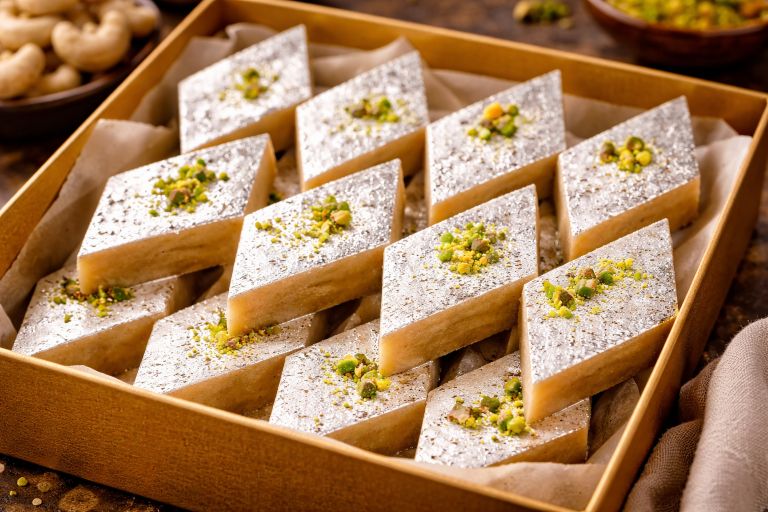
Unravelling the Sweet Tale of Kaju Katli: History, Culture, and Tradition
Kaju katli is the one Indian sweet I can never say no to. Growing up in Mumbai, every Diwali meant boxes of mithai arriving at the door from family and friends, and I would always open each box hoping to find kaju katli inside. There is something about the smooth, melt-in-your-mouth texture and the pure cashew flavour that no other sweet can match. When I first tried making it at home, I overcooked the cashew paste, and it turned hard and crumbly instead of soft and smooth. The secret, I eventually learned, is to take it off the heat the moment the mixture starts leaving the sides of the pan — even thirty seconds too long and the texture changes completely. This recipe is the version that finally gave me that perfect, silver-topped kaju katli I had been chasing.
Kaju katli holds a special place in the world of Indian sweets. Its smooth texture, rich cashew flavour, and delicate silver foil topping have made it a favourite across the country and beyond. It is the sweet that appears at every celebration — Diwali, weddings, birthdays, housewarmings — and it is almost always the first one to disappear from the box.
But beneath its simple elegance lies a rich history woven into Indian culture and tradition. Kaju katli is more than just a sweet — it is a gesture of love, respect, and celebration. In this post, I explore the origins, cultural significance, and the story behind this iconic Indian delicacy, along with a recipe that you can make at home with just a handful of ingredients.
The Origins of Kaju Katli:
Kaju Katli has its origins in the royal kitchens of the Indian subcontinent. The Mughal emperors' kitchens created this Kaju Katli, a luxury indulgence fit for kings. Known originally as "Kaju Barfi," it was made from cashew nuts, sugar, and ghee (clarified butter), creating a confectionery masterpiece that delighted the palates of the elite.
It was not only a cooking activity but also an art to make this unique Indian dessert, which speaks about the craftsmanship of Indian confectioners. They were able to transform simple ingredients into something fit for kings and queens by thorough preparation and skilled techniques.
Cultural Significance:
Kaju Katli, a royal delicacy, has traversed the centuries and now stands as an indispensable part of Indian culture and tradition. It has become synonymous with celebrations, festivities, and moments of joy. Be it a wedding, festival, or a simple family gathering, no auspicious occasion is ever complete without this beloved sweet.
Furthermore, Kaju Katli is also very close to the hearts of Indians abroad. It acts as a nostalgic reminder of home and heritage, often shared with friends and family during festivals like Diwali, Eid, and Raksha Bandhan, thereby creating a sense of unity and camaraderie across borders.
The Making of Kaju Katli:
It is a sort of art in the making of this amazing dessert. Precautions, patience, and detailed attention are necessary here. First, select the finest cashew nuts and grind them into a nice, smooth paste. This paste is first cooked with sugar and ghee to get the perfect consistency, then rolled and cut into diamond shapes; later, it is edged with edible silver foil.
The regional variation and family secrets give every piece of Kaju Katli its uniqueness. Some prefer to have a hint of cardamom to enhance the taste, and others add pistachios or almonds as garnishes for aesthetics.
Recipe for Kaju Katli (Cashew Fudge) at Home
Kaju Katli is a famous Indian sweet prepared from cashew nuts and sugar. It is rich in flavour, smooth in texture, and cut into diamond-shaped pieces. You will be surprised to know that preparing Kaju Katli at home is not that difficult. Here's how you can prepare this sweet dish:
Ingredients:
- 1 cup cashew nuts (kaju)
- 1/2 cup sugar
- 1/4 cup water
- 1 tablespoon ghee (clarified butter)
- 1/4 teaspoon cardamom powder (optional)
Edible silver leaf (optional, for garnish)
Instructions to make Kaju Katli at home:
-
Cashew Preparing:
Begin by grinding cashews into fine powder. For that, use either a food processor or a dry grinder. Process in pulses for short bursts, so as not to let it turn to a paste. It must be powdered, smooth and free of oils.
-
Prepare Sugar Syrup:
In a non-stick pan, put in sugar and water. Put on medium heat.
Stir occasionally until the sugar dissolves completely and the syrup begins to simmer. You want to reach a one-string consistency. To check, take a small drop of the syrup between your thumb and forefinger; it should form a single thread when pulled apart. This step is crucial for the right texture of the Kaju Katli.
-
Add Cashew Powder:
When the sugar syrup has reached the right consistency, lower the heat and add the cashew powder. Stir constantly to mix the cashew powder and syrup into a smooth paste.
The mixture will thicken rapidly, so keep stirring to avoid lumps.
-
Cook the Mixture:
Keep cooking the cashew and sugar mixture on low heat for 5-7 minutes, stirring constantly. The mixture will start coming together and forming a dough-like consistency. If the mixture sticks to the sides of the pan, it is time to move on to the next step.
-
Add Ghee and Cardamom Powder:
Mix well, adding the remaining 1 tablespoon of ghee and cardamom powder, stirring until fully absorbed and looking glossy and smooth.
-
Set the Dough:
Grease a plate or marble surface with some ghee, transfer the dough onto the surface, and knead into a long, flat sheet with a rolling pin.
Roll the dough into a thin sheet, about 1/4 inch thick. If you prefer, you can use parchment paper to roll it out smoothly.
-
Shape the Kaju Katli:
Once the dough is rolled out, let it cool for a few minutes. Before it fully sets, cut the rolled dough into diamond or square shapes using a sharp knife.
Let the Kaju Katli cool completely. It will harden as it cools.
-
Optional Garnish:
For an elegant touch, you can garnish the Kaju Katli with edible silver leaf (chandi ka vark) before serving.
Tips:
Consistency of Sugar Syrup: Achieving the right consistency of sugar syrup is key to getting the perfect texture for Kaju Katli. If it's too thin, the sweets will be sticky. If it's too thick, it will become hard.
Grinding Cashews: Ensure that you grind the cashews to a fine powder. Any coarser texture can result in a lumpy mixture.
Flavour Variations: You can mix a few saffron strands with the sugar syrup for that richer flavour and colour.
Conclusion:
This unique dessert is like a jewel shining in the tapestry of Indian sweets. This sweet carries centuries of culinary heritage, culture, and tradition. Its journey from the royal courts to kitchen tables worldwide is a testament to its timeless appeal and universal charm. So, indulge in a piece of Kaju Katli, savour the rich history and cultural significance it embodies.
Share your thoughts on our Instagram Channel @thefood.travellers