

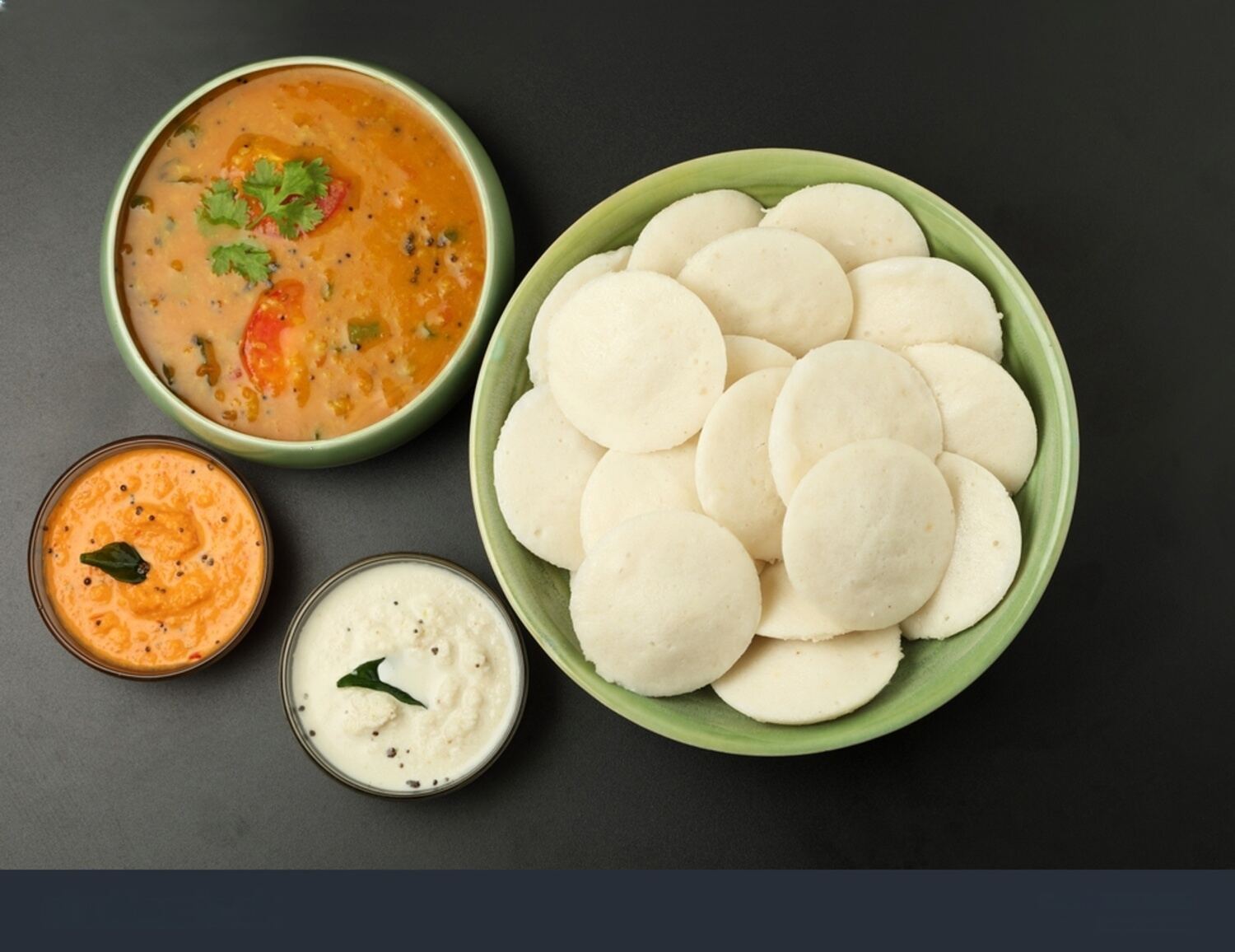
Soft & Fluffy Idli Recipe (Traditional South Indian Breakfast)
Introduction
I grew up in Mumbai, and on Sunday mornings we would often go to one of the famous tiffin centres in Matunga for a plate of soft, fluffy idlis with piping hot sambar and fresh coconut chutney. Those breakfasts are still some of my most memorable childhood memories.
Once I moved to Bangalore, I was determined to recreate those same pillowy idlis at home. The weather here in Karnataka is great for idli batter fermentation, but it took me a couple of tries to achieve it right. I remember how excited I was when I made my first perfect soft batch. I immediately called up my mum because it tasted exactly like the idlis I grew up eating.
Idli is a popular South Indian breakfast made from fermented rice and urad dal batter. It is steamed rather than fried, giving it a soft texture and making it a simple accompaniment for chutney and sambar.
The slow fermentation process helps create idlis’ characteristic airy texture and mild tang.
This humble dish is commonly served with coconut chutney, sambar or idli podi.
You can serve idli traditionally or use it for variations such as fried idli and idli Manchurian.
Quick Recipe Overview
| Cuisine | South Indian |
|---|---|
| Course | Breakfast |
| Diet | Vegetarian |
| Prep Time | 30 minutes |
| Soaking Time | 6–8 hours |
| Fermentation Time | 8–12 hours |
| Cooking Time | 10–12 minutes |
| Total Time | Approximately 16–20 hours (including soaking & fermentation) |
| Difficulty | Easy |
| Best Served With | Coconut Chutney, Sambar & Idli Podi |
What is Idli?
Idli is a traditional South Indian steamed rice cake made from fermented rice and urad dal batter. The batter is fermented overnight and steamed into soft, fluffy cakes.
Idlis are steamed rather than fried; the final nutrition depends on the batter, portion size and accompaniments. The mild taste makes them a good companion for various chutneys, sambar and podi.
History of Idli
Idli has been a staple in South Indian cuisine for over a thousand years and is one of India’s oldest breakfast dishes.
Today’s idlis are far more sophisticated than their predecessors. Today, the soft and fluffy idlis we all love are the result of improvements in the grinding and fermentation processes over the years.
Furthermore, many food historians also believe that the fermentation practices of Southeast Asia might have also contributed to the development of idli, making it a fascinating blend of regional tradition and culinary evolution.
Why you will love this recipe
- Fluffy and soft, every time
- Made with basic pantry ingredients
- Vegetarian Only
- Steamed not fried
- Easy to consume
- Perfect for breakfast, dinner or lunch boxes
- Perfect for meal prep
Idli Nutrition and Serving Notes
Idli uses a short ingredient list and fermentation, with nutrition varying by recipe and serving.
Recipe Notes
- Fermentation changes the batter’s texture and flavour; individual tolerance varies.
- Steaming requires very little or no oil.
- Rice and urad dal provide carbohydrates and some protein.
- The soft steamed texture works well with chutney and sambar.
- Serve portions and accompaniments according to individual needs.
- Light yet filling.
Nutrition Information (Per Idli)
| Nutrient | Approximate Value |
|---|---|
| Calories | 70–100 kcal |
| Carbohydrates | 18–22 g |
| Protein | 2–3 g |
| Fat | Less than 1 g |
Nutrition values are approximate and may vary depending on ingredients used.
Ingredients
For the Batter
- 2 cups rice for idli
- 1 cup urad dal split
- 1 teaspoon methi (fenugreek) seeds
- Salt as needed
- Water as needed
Optional Ingredients
- ¼ Cup of soaked poha (flattened rice) for softer Idli
- A few tablespoons cooked rice for added softness
How to Make Soft Idli Batter
Step 1: Soak the Ingredients
Wash the rice and urad dal well. Soak the rice and the urad dal separately. For extra fluffy idli, add a fistful of poha and a tsp of fenugreek seeds while soaking the urad dal. Allow to soak 6-8 hours.
Step 2: Grind the Batter
Grind urad dal to a smooth, light and fluffy paste. Then grind the rice a little coarser. Combine the two batters in a large bowl. Add salt and mix well with your clean hands.
Step 3: Ferment the Batter
Cover the bowl and set in a warm spot for 8 to 12 hours or overnight. The batter should be light and airy, double in bulk.
How to Steam The Idlis
Step 1
Grease the idli moulds lightly with oil and keep the bottom of the steamer filled with water.
Step 2
Pour the fermented batter into the moulds to about three-quarters full.
Step 3
Steam 10-12 minutes. Test the idlis for doneness by putting a knife or a toothpick in. Allow to cool in the moulds for 2 minutes.
Serve hot immediately.
What to Serve with Idli
Idlis taste best with the following:
- Coconut Chutney
- Sambar
- Tomato Chutney
- Peanut Chutney
- Idli Podi (Gunpowder) with Ghee
You may also enjoy these recipes:
- Onion Tomato Chutney
- Coconut Chutney
- Kerala Style Sambar
Variations
Once you've mastered classic idli, try these delicious variations:
- Rava Idli
- Oats Idli
- Kanchipuram Idli
- Mini Idli
- Fried Idli
- Idli Manchurian
- Millet Idli
Expert Tips
- Fresh urad dal should be used always for better fermentation.
- Grind the urad dal to a light and fluffy consistency.
- Don't over fill the idli moulds.
- To get the best rise, let the batter ferment in a warm place.
- Gently combine the fermented batter before steaming.
- Take care not to over-steam as it makes the idlis dry.
Frequently Asked Questions
Why are my idlis hard?
The batter might not have fermented properly or might have been too thick. Soft and fluffy idlis depend on proper fermentation.
Can I refrigerate the batter?
Yes, you can refrigerate the batter in an airtight container for up to 3 to 4 days.
Can I make idlis in a pressure cooker?
Yes, you can steam the idlis in a pressure cooker without putting the whistle on the lid.
How do I tell when the batter has fermented?
The batter should almost double in volume, look airy and have a mild tangy aroma.
Can beginners make idlis?
Yeah. After you understand soaking, grinding and fermentation, it’s easy to make soft idlis.
Final Thoughts
There’s a reason idli has remained a favourite breakfast for generations. It is comforting and straightforward to make once the batter and fermentation are right.
Once you get the batter and fermentation right, you can have restaurant style soft and fluffy idlis at home anytime you want. Serve with a bowl of hot sambar and your favourite chutney and you have a breakfast that is both nourishing and incredibly satisfying.
Comments are closed.