
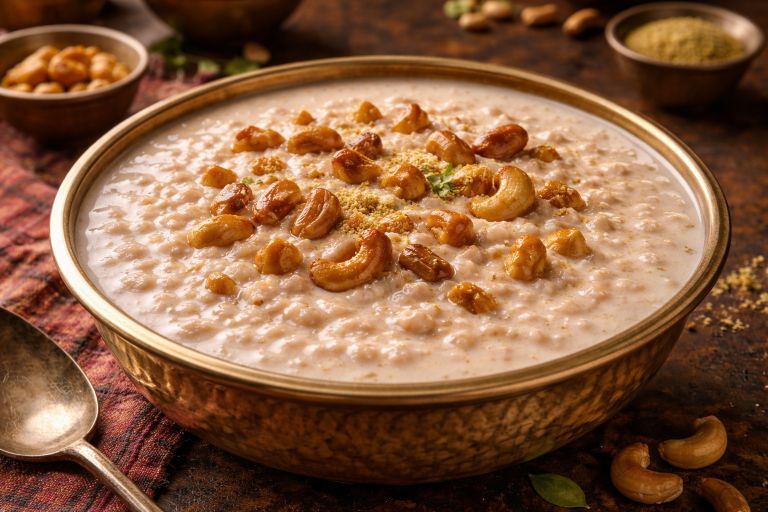
Palada Payasam – Kerala’s Traditional Rice Ada Milk Dessert

December 26, 2024

Palada Payasam: A Sweet Tradition of Kerala’s Culinary Heritage

Palada Payasam remains one of Kerala’s most beloved desserts and continues to be an essential part of traditional celebrations. Not only is it known for its rich taste and creamy texture, but it also holds deep cultural significance. In fact, this delightful dessert forms an essential part of Kerala’s culinary heritage. Therefore, people commonly prepare and enjoy it during festivals, weddings, and many other special occasions.

History and Origin

The roots of Palada Payasam, also known as Paal Ada Pradhaman, trace back to the ancient culinary traditions of Kerala. Over the centuries, Kerala’s cuisine has evolved through influences from different cultures and communities. Consequently, these influences helped shape the unique flavors of this beloved dessert.

Historians believe that royal kitchens of Kerala’s former kingdoms originally prepared this sweet delicacy. Moreover, the word “Pradhaman” itself reflects its prestigious place in traditional meals. In elaborate feasts, particularly in Kerala’s traditional dining culture, this dish often appears as one of the most important courses.

Components of Palada Payasam

The name Palada Payasam comes from two important ingredients. Firstly, “Paal” means milk, while “Ada” refers to thin rice flakes made from pounded rice.

Traditionally, people prepare this dessert using rice ada, milk, and sweeteners. In addition, jaggery—an unrefined cane sugar—often enhances the sweetness and gives the dish its distinctive flavor. Furthermore, coconut milk adds richness and depth to the dessert.

Finally, cooks usually flavor the payasam with cardamom, which brings a warm aroma and enhances the overall taste. As a result, these ingredients blend beautifully to create a dessert that perfectly represents Kerala’s culinary traditions.

Cultural Significance and Tradition

Palada Payasam holds a very special place in Kerala’s cultural and social traditions. More importantly, it represents hospitality, generosity, and celebration.

In Kerala, families often prepare this payasam as a gesture of love and respect when welcoming guests. Therefore, serving this dessert reflects the warmth and hospitality that the state is famous for.

Moreover, Palada Payasam plays an important role during Onam, Kerala’s harvest festival. During this grand celebration, families serve it as part of the famous Onam Sadhya, a traditional feast served on banana leaves.

In addition, people prepare this dessert during weddings, housewarming ceremonies, and other joyful occasions believed to bring prosperity and happiness.

Furthermore, the preparation of Palada Payasam itself has become a cherished family tradition. Elders often teach the recipe to younger generations, thereby passing down both the culinary technique and the cultural significance of this sweet dish.

Preparation of Palada Payasam

Preparing Palada Payasam requires patience, care, and attention to detail. First, cooks soak the rice ada in water and then cook it until soft and tender.

Meanwhile, they prepare a jaggery syrup separately to ensure the sweetness blends evenly with the dish. Once ready, they combine the syrup with the cooked rice flakes, creating the base flavor of the dessert.

Next, thick coconut milk or regular milk is added gradually to achieve a smooth and creamy texture. Finally, crushed cardamom pods enhance the aroma and add a delicate fragrance that elevates the overall experience of the dessert.

As a result, the dish develops a rich flavor and silky consistency that makes it truly irresistible.

Serving Palada Payasam

Traditionally, people serve Palada Payasam in small bowls. However, during festive meals such as the Onam Sadhya, it is often served directly on a banana leaf along with other dishes.

Because of its comforting sweetness and creamy texture, this dessert usually marks the perfect ending to a traditional Kerala meal. Consequently, it leaves guests with a memorable and satisfying culinary experience.

Palada Payasam Heritage in Kerala Temples

Interestingly, Palada Payasam also plays an important role in Kerala’s temple traditions. In many temples, devotees offer this dessert as prasadam, which symbolizes divine blessings.

Here are some of the most prominent temples where Palada Payasam holds cultural importance:

1. Guruvayur Shri Krishna Temple, Guruvayur

This sacred temple is one of the most famous pilgrimage sites in Kerala. Devotees often offer Palada Payasam as a special offering to Lord Krishna.

2. Sree Padmanabhaswamy Temple, Thiruvananthapuram

Known for its grandeur and historical importance, this temple celebrates many traditional feasts where this payasam is often included.

3. Ambalapuzha Sree Krishna Temple

This temple is especially famous for its milk payasam, and it also celebrates the rich tradition of this Payasam.

4. Vadakkunnathan Temple, Thrissur

A major cultural landmark of Kerala, this temple hosts grand festivals where traditional foods, including this Payasam, play a key role.

5. Chottanikkara Bhagavathy Temple

Known as a powerful healing temple, it offers this payasam as a sacred prasadam symbolizing divine blessings.

Together, these temples beautifully reflect Kerala’s spiritual traditions and culinary heritage.

In essence, this type of payasam is more than just a dessert. Instead, it represents Kerala’s culture, hospitality, and deep-rooted traditions. Through its rich flavors and symbolic significance, this beloved sweet dish continues to remain an important part of the state’s vibrant heritage.

Share your thoughts with us on Instagram @thefood.travellers.

Like
Close
Copyright © 2022 LEMON & LIMES.
Made with by Loft.Ocean. All rights reserved.
Close