
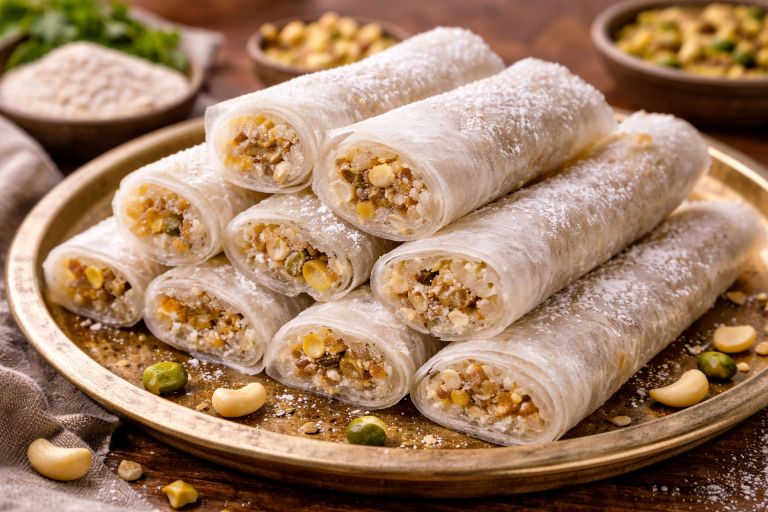
Pootharekulu: The Irresistible Charm
I had never heard of pootharekulu until a colleague from Andhra Pradesh brought a box of them to the office on Sankranti. The paper-thin, translucent sheets filled with jaggery and coconut were unlike any sweet I had ever tasted — crispy, delicate, and deeply flavourful all at once.
I was so fascinated that I spent the next few weeks researching how they were made, and the skill involved is genuinely remarkable. The artisans who make these in Dandepalli spread rice flour batter so thin on a hot griddle that the resulting crepe is almost transparent.
When I attempted it at home, my first few sheets tore immediately. It took patience and a much lighter hand than I am used to before I could get a sheet thin enough to work with. This recipe is the version that finally came together, and while my pootharekulu will never match what those Kurnool artisans can do, they taste close enough to bring back the memory of that first box.
Pootharekulu is one of the most beautiful traditional sweets from Andhra Pradesh. The name translates to "thin sheets" in Telugu, which perfectly describes the paper-thin rice flour crepes at the heart of this dish. It traces its origins to the small town of Dandepalli in the Kurnool district, where local artisans have mastered the craft of spreading rice flour batter so thin that the resulting crepe is almost transparent and perfectly crispy.
Traditionally, these delicate sheets are filled with a sweet mixture of jaggery, grated coconut, and cardamom, though savoury versions also exist. Pootharekulu is more than just a recipe — it is a celebration of culture and tradition, often prepared for festivals and family gatherings. Families cook together, sharing stories and laughter while assembling the delicate layers, and anything made in pootharekulu form is seen as a gift of love and warmth.
Historical Origins of Pootharekulu:
Pootharekulu originated in the rural heartlands of Andhra Pradesh, where rice flour is a staple ingredient. Traditionally, this dish was prepared by village women who would skillfully spread a thin layer of rice flour batter on a hot griddle, creating a translucent, paper-like texture. The method of preparation reflects the ingenuity of local cooks who made use of available ingredients to create a delightful, nutritious dish.
This has always been a delicacy served in festivals and other special occasions, so it's more than a meal; it is a symbol of culture. Preparing the pootharekulu is usually a social event, making bonding a fun affair for the families and friends involved. As the years pass, it still manages to transform modern tastes, keeping its oldness intact.
Ingredients for Pootharekulu:
- 2 cups of rice flour; fine
- 1 ½ cup water, depending on the required consistency
- ¼ teaspoon salt (optional)
- Ghee or oil to cook
Optional Filling:
- 1 cup grated jaggery or sugar
- ½ cup grated coconut, fresh or desiccated
- 1 tsp. cardamom powder
- Chopped nuts -cashews, almonds, pistachios
Preparation Time
Prep Time: 10 minutes | Cooking Time: 30 minutes | Total Time: 40 minutes
Preparation Instructions
Combine rice flour, salt and water in a mixing bowl and mix thoroughly so that no lumps form in the batter. The batter is similar to that of pancakes, and rest it for about 10-15 minutes.
Prepare the filling (if using)
In a separate bowl, mix the grated jaggery, coconut and cardamom powder. The filling is optional but beautifully sweetens the pootharekulu.
Preparation of Pootharekulu:
Heat a non-stick tawa or griddle in the pan and let it get hot. Now slowly reduce the flame to low.
Pour a ladleful of the batter into the centre of the tawa and spread it in a circular motion, thinly and evenly, to a paper-thin consistency.
Drizzle a little ghee or oil around the edges and on top of the layer. Cook for 1-2 minutes until the edges start to lift and the surface looks cooked.
Adding the Filling (if using):
Sprinkle the little amount of sweet filling on top of the cooked layer. Fold the pootharekulu in half or roll it up so that the filling inside gets covered properly.
Serving:
Cook for another 1-2 minutes till the filling is warm and the pootharekulu turns lightly brown. Remove it from the tawa and repeat with the remaining batter.
Serve hot, drizzled with ghee or accompanied by a sweet or savoury dip.
Nutritional Value
Pootharekulu is not just a yummy snack but also brings along with it several health benefits. This dish, made primarily from rice flour, is gluten-free and provides carbohydrates for energy. If desired, the addition of coconut and jaggery filling offers healthy fats, vitamins, and minerals. Hence, this dish is quite wholesome.
Conclusion
Pootharekulu is more than a dish; it represents the spirit of community and tradition in Andhra Pradesh. Its unique texture, delightful flavour, and historical significance make it a must-try for anyone interested in exploring the diverse culinary heritage of India. Whether enjoyed as a snack or a dessert, pootharekulu promises a delightful experience that resonates with the heart of Indian culture.
Try making this exquisite dish at home and sharing the joy of pootharekulu with your family and friends!
Share your thoughts on our Instagram Channel @thefood.travellers