
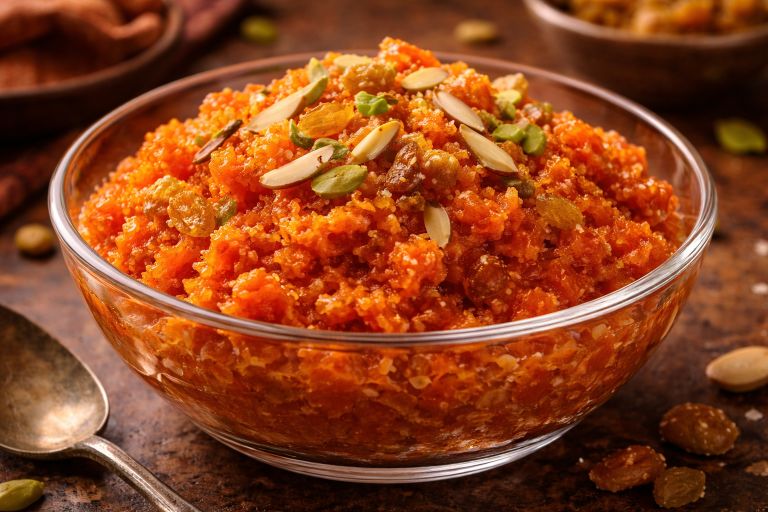
The Ultimate Gajar Ka Halwa Recipe
Gajar ka halwa is the one dessert that signals winter has arrived in our home. Growing up in Mumbai, my mother would start making it the moment fresh red carrots appeared in the market, and the smell of carrots slowly cooking down in milk and ghee would fill the house for hours. I used to sit in the kitchen and wait for the moment she would hand me the spoon to taste — that first warm bite, rich with ghee and cardamom, is one of my strongest food memories.
When I started making it in Bangalore, I learned that the carrot quality matters more than anything else. The deep red winter carrots that appear between November and February give the halwa its signature colour and sweetness. My first batch with regular orange carrots tasted fine, but lacked that depth. This recipe uses the method my mother taught me, and I make it every winter without fail.
Gajar ka halwa is far more than a dessert — it is an essential part of Indian culinary heritage. This bright, rich carrot-based sweet dish has a nostalgic appeal in Indian homes that few other desserts can match. It appears at family dinners, festival celebrations, and weddings, and every spoonful carries warmth, tradition, and a sense of celebration.
The beauty of gajar ka halwa lies in its simplicity. Fresh carrots, milk, sugar, and ghee are all you need, and the slow cooking process transforms these basic ingredients into something extraordinary. It is one of the most beloved Indian desserts both at home and around the world, and once you taste a properly made version, you understand why it has been cherished for generations.
Origins and History
The Mughal Influence
This dates back to the time of the Mughals and their luxurious food inventions. The Mughals introduced the slow-cooked, milk-based sweets to India. The combination of Persian traditions of cuisine, blended with the native flavour of India, has led to unique and mouthwatering dishes. Gajar ka Halwa is the culmination of this process, blending Persian "halwa" and the adaptation of red carrots and dairy from the Indian side.
The Arabic term hulw, meaning "sweet," gave rise to the word halwa. Although the first forms of halwa in the Middle East and Persia were mainly prepared with flour, butter, and sugar, the Indian version used local ingredients such as carrots, milk, and ghee. The Mughals enjoyed the dish not only for its taste but also for its nourishing qualities. Carrots, being rich in vitamins, combined with milk and nuts, made this dessert a wholesome, luxurious treat.
Evolution of Gajar ka Halwa:
Gajar ka Halwa became a household favourite across India over time, as it transcended its royal origins. The affordability of this dessert and the availability of its ingredients led to this shift. During winter, red carrots, commonly known as "Delhi carrots," are in plenty in North India. The carrots are sweet in taste and colour, which makes them suitable for this dessert.
It gained much popularity in regions like Punjab and Uttar Pradesh, where winters are celebrated with hearty, warming foods. With the arrival of festivals like Diwali, Holi, and Eid, Gajar ka Halwa became a staple offering, symbolising warmth, abundance, and togetherness. Families often gathered around the kitchen to prepare this labour-intensive dessert, turning the cooking process into an occasion of bonding and sharing.
Cultural Significance:
The cultural significance of Gajar ka Halwa is beyond its taste. It is a dessert that epitomises Indian hospitality and culture. A bowl of freshly prepared halwa offered to guests represents warmth and generosity. And its association with winter celebrations makes it more appealing. The comforting aroma of the ghee, cardamom, and carrots cooked up in Indian homes during winter is a memory many take pleasure in.
Gajar ka Halwa has also been considered a badge of regional pride. For example:
- Punjab often enhances it by using khoya, or the milk solid, which has been boiled and is dried, adding an extra dollop of ghee and the overall indulgence.
- In Uttar Pradesh and Delhi, it has become an ideal festive dessert as prepared in large quantity in the time of weddings and family gatherings.
- Rajasthan is done with the addition of saffron and dry fruits, making it like royalty.
Within recent times, Gajar ka Halwa has found worldwide acclaim; now, Indian restaurants feature this quintessential dessert everywhere. Its flexibility also led it to adapt with time according to changing tastes. Versions such as vegan Gajar ka Halwa with almond milk and coconut oil, or the fusion preparations such as Gajar Halwa Cheesecake and Gajar Halwa Tarts, have re-invented the very essence of this classic.
Despite these innovations, the essence of Gajar ka Halwa remains rooted in its history. It continues to be a timeless dish that bridges the gap between past and present, tradition and modernity.
The Recipe: How to Make Perfect Gajar ka Halwa:
Crafting Gajar ka Halwa is an art that requires patience and love. Below is a step-by-step guide to prepare this indulgent dessert.
Ingredients:
- Fresh red carrots (grated): 1 kg
- Full-fat milk: 1 liter
- Ghee (clarified butter): 4 tablespoons
- Sugar: 1 cup (adjust according to taste)
- Crushed green cardamom pods: 4-5
- Chopped cashews, almonds, and pistachios: ½ cup
- Raisins: 2 tablespoons
- Khoya: 150 grams. (Optional for richness)
Preparation Time:
Grating carrots: 20 minutes | Cooking time: 1.5 to 2 hours | Total time: Approximately 2.5 hours
Step-by-Step Instructions:
Preparation:
Wash and peel the carrots. Grate them using a medium grater for the perfect texture.
Cook the Carrots:
- Heat 2 tablespoons of ghee in a heavy-bottomed pan or kadhai.
- Add the grated carrots and sauté on medium heat for 8-10 minutes to enhance their aroma.
Add Milk:
- Add milk and stir well. Let the mixture simmer on low heat, stirring occasionally to prevent sticking.
- Cook till the milk reduces completely and allows the carrots to soak in it (about 40-50 minutes).
Sweeten the Halwa
Slowly add the sugar:
- Add sugar to the carrot-milk mixture. Stir continuously until the sugar melts and integrates. Cook for an additional 10 minutes until the mixture thickens.
Enhance with Ghee and Flavour:
- Add the remaining ghee and crushed cardamom pods. Mix well and cook for another 5 minutes.
- Add Nuts and Khoya
- Stir in the chopped nuts, raisins, and grated khoya (if using). Cook for 5-7 minutes until the halwa achieves the desired consistency.
Serve:
Serve warm, garnished with extra nuts for an elegant finish.
Nutritional Value:
A serving of Gajar ka Halwa (100 grams) contains about:
Calories: 300 | Protein: 5g | Fat: 12g | Carbohydrates: 40g | Fiber: 2g
Though indulgent, this dessert is full of nutrients such as Vitamin A from carrots, calcium from milk, and healthy fats from nuts.
Why Gajar ka Halwa is So Popular?
Gajar ka Halwa has become an iconic dish for several reasons:
- Versatility: Enjoy it hot in winters or cold in summers; equally tasty.
- Festive Charm: An indispensable part of Indian festivals, representing joy and togetherness.
- Health Benefits: The perfect balance of indulgence and nutrition.
- Adaptability: Vegan recipes, pressure cooker methods, and innovative fusions like Gajar Halwa Cheesecake.
Best Places to Enjoy Gajar ka Halwa in India:
Though Gajar ka Halwa is enjoyed everywhere in India, there are places where it is prepared with such excellence that people travel to relish it.
- Old Delhi: Traditional sweet shops Giani's Di Hatti and Chaina Ram of Chandni Chowk specialise in the authentic Gajar ka Halwa.
- Amritsar: This city has much to offer in the realm of sweets, especially as Amritsar's halwa is served best with hot milk.
- Jaipur: Desi ghee halwa is a popular item in Jaipur, although saffron has been added to this traditional dessert.
- Mumbai: Right from street vendors to top-of-the-line restaurants such as Punjab Grill, it all caters to everyone.
- Lucknow: It is known for its enriched halwa, garnished with gold leaf, which adds a Nawabi touch.
Conclusion:
This recipe goes beyond its definition as a dessert to become an ode to India's food culture. Its evolution from Mughal kitchens to Indian homes and sweet shops across the globe is a testament to its timeless appeal. Whether it is prepared at home or savoured in India's most iconic locations, this dessert leaves behind an indelible mark of indulgence and nostalgia.
Share your thoughts on our Instagram channel @thefood.travellers