

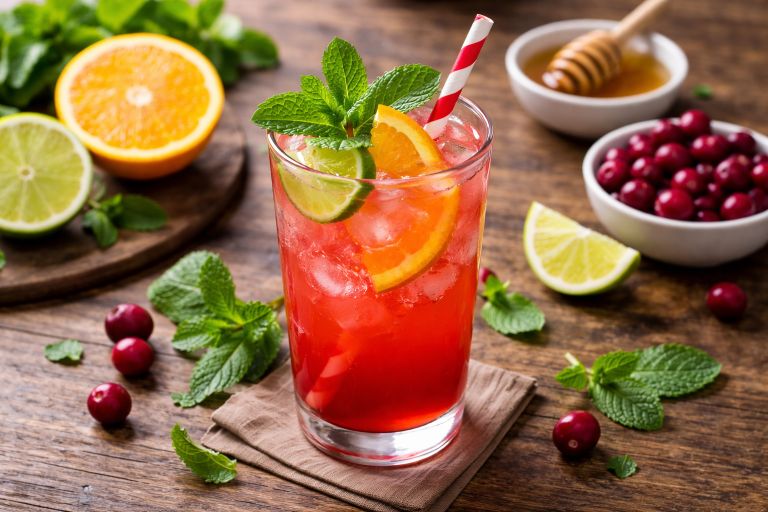
Experience the Zest of Cranberry Citrus Bliss
I discovered the magic of cranberry juice in mocktails when I was trying to make a non-alcoholic drink that looked as good as a cocktail for a dinner party. The deep ruby colour of cranberry juice is stunning in a glass, and when I mixed it with fresh orange and lime juice, the tart-sweet combination was exactly what I was looking for. The first version was too sour because I went heavy on the cranberry, but adding a touch of honey and some sparkling water balanced everything out perfectly. It has since become my signature party mocktail — guests always assume it took effort, but it is genuinely one of the easiest drinks I make.
Cranberry juice has a long and interesting history. Native Americans valued cranberries not just as food but also for their medicinal benefits, using the fruit to treat infections and heal wounds. Over time, cranberry juice found its way into American cuisine and became a popular ingredient in beverages, prized for its tart flavour and vibrant colour.
Today, cranberry juice has become one of the most versatile ingredients in mocktail-making. Its deep red colour makes any drink look sophisticated, and its natural tartness creates a perfect balance when paired with citrus fruits, honey, and sparkling water. This cranberry citrus bliss mocktail brings all of those elements together — tart cranberry, bright citrus, gentle sweetness, and a fizzy finish that makes every sip feel refreshing and celebratory.
History of the Cranberry Fruit
The cranberry is a small yet powerful fruit with a rich history spanning thousands of years. Native to North America, the cranberry plant, scientifically known as Vaccinium macrocarpon, is one of the few fruits that originated on the continent and is still widely cultivated today.
Interestingly, the indigenous peoples of North America were the first to recognise the fruit’s value. For instance, Native American tribes called the fruit “sassamanash.” They used cranberries not only as a food source but also for medicinal treatments and natural dyes.
Furthermore, cranberries played an essential role in traditional foods. For example, Native Americans used them in pemmican, a mixture of dried meat, fat, and cranberries that provided long-lasting nutrition. In addition, the fruit’s natural acidity helped preserve food. Consequently, cranberries became an important ingredient in sustaining communities during long winters.
At the same time, people valued cranberries for their healing properties. Because they contain natural acids and vitamins, the fruit helped treat wounds and maintain good health. Therefore, cranberries were both nutritious and medicinal in early cultures.
Early Years of Cranberry Cultivation
When European settlers arrived in North America during the early 1600s, they quickly adopted cranberries into their diets. In fact, Native Americans introduced the fruit to the Pilgrims. As a result, cranberries became part of the first Thanksgiving celebrations.
Eventually, settlers began calling the fruit “craneberry.” This name developed because the cranberry flower resembled the head and neck of a crane. Over time, the name shortened to simply cranberry, which is the term used today.
Meanwhile, commercial cranberry farming began during the 19th century. Henry Hall, a Revolutionary War veteran from Massachusetts, played a crucial role in this development. Notably, he discovered that sand blown onto cranberry vines helped them grow better. Therefore, farmers started adding sand to cranberry bogs to improve crop growth.
Today, this technique forms part of modern cranberry harvesting methods. Consequently, cranberry farming expanded rapidly across North America.
Currently, cranberries grow mainly in the United States, Canada, and Chile. However, the United States remains the largest producer. For instance, states such as Wisconsin, Massachusetts, New Jersey, and Oregon contain large cranberry bogs.
Besides their culinary uses, cranberries are widely appreciated for their health benefits. In particular, they contain antioxidants and support urinary tract health. Because of these qualities, cranberries continue to remain a valued fruit across cultures worldwide.
Recipe for Cranberry Citrus Bliss
This refreshing mocktail combines the tartness of cranberry juice with vibrant citrus flavours and a hint of herbal freshness. As a result, it creates a perfectly balanced drink suitable for any occasion.
Ingredients
- 3 oz / 90 ml cranberry juice (unsweetened for a stronger tart flavour)
- 1 oz / 30 ml fresh lime juice
- 1 oz / 30 ml fresh orange juice
- 1 oz / 30 ml honey or agave syrup (adjust to taste)
- 4–5 fresh mint leaves, plus a sprig for garnish
- Soda water or tonic water to top off
- Ice cubes
- Orange slices and lime wedges for garnish
Equipment Needed
- Cocktail shaker
- Jigger or measuring spoons
- Strainer
- Highball glass or tumbler
Step-by-Step Instructions for Cranberry Citrus Bliss
Muddle the Mint
First, place the fresh mint leaves and honey (or agave syrup) into a cocktail shaker. Then, gently crush the mint leaves using a muddler or the back of a spoon. This process releases the essential oils from the mint and enhances the drink’s aroma.
Mix the Juices
Next, add cranberry juice, lime juice, and orange juice to the shaker. After that, fill the shaker with ice cubes and close the lid securely.
Shake the Drink
Then, shake the mixture vigorously for about 15 seconds. As a result, the ingredients combine well and become nicely chilled.
Strain and Serve
After shaking, strain the mixture into a highball glass filled with fresh ice cubes. This step ensures that the mint leaves remain in the shaker.
Add the Sparkle
Now, gently pour soda water or tonic water into the glass. Meanwhile, stir lightly to combine all the flavours.
Garnish
Finally, garnish the drink with an orange slice, a lime wedge, and a fresh sprig of mint. Not only does this improve the presentation, but it also enhances the aroma.
Conclusion
Cranberry Citrus Bliss is more than just a refreshing mocktail. In fact, it celebrates the rich history and vibrant flavour of cranberries. Moreover, its bright colour and tangy taste make it perfect for celebrations, gatherings, or relaxing evenings.
Additionally, the combination of citrus juices and fresh mint creates a drink that feels both festive and sophisticated. Therefore, this mocktail is an excellent choice for anyone looking for a flavorful alcohol-free beverage.
Ultimately, Cranberry Citrus Bliss delivers freshness, flavour, and elegance in every sip. Cheers!
Share your thoughts on our Instagram channel @thefood.travellers
This recipe is part of our Complete Indian Beverages & Drinks Guide — explore mango lassi, mocktails, smoothies and more.
Comments are closed.