

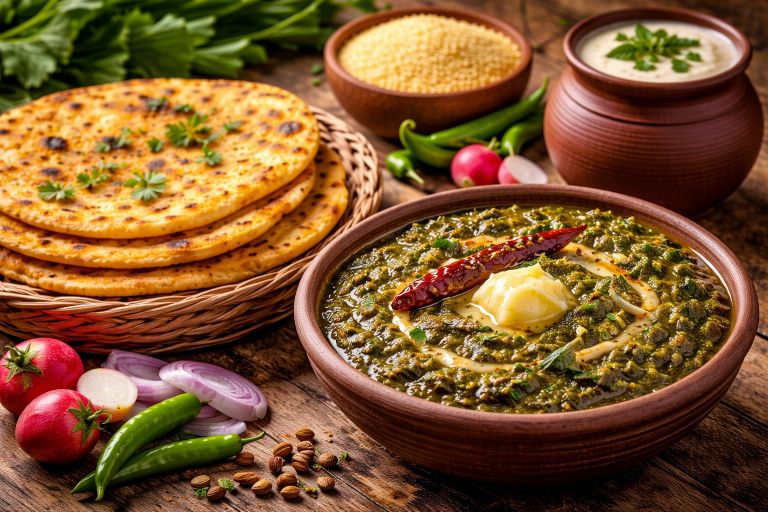
Makki Di Roti and Sarson Ka Saag: A Punjabi Winter Classic
I first had proper sarson ka saag and makki di roti at a Punjabi friend's home in Mumbai during winter, and I understood immediately why Punjabis talk about this dish with such emotion. The saag had been slow-cooked for hours until it was creamy and deeply flavourful, and the makki di roti was served hot off the tawa with a generous dollop of white butter melting on top. It was one of the most comforting meals I had ever eaten. When I tried making it at home, the makki di roti gave me the most trouble — cornmeal dough does not hold together the way wheat dough does, and my first few rotis cracked and fell apart on the tawa. The trick I learned is to pat them gently with wet hands and keep them small and thick. This recipe is the version I now make every winter, and the smell of mustard greens simmering on the stove has become one of my favourite signals that the cold season has arrived.
Makki di roti and sarson ka saag is one of Punjab's most cherished culinary traditions. This iconic combination reflects the warmth, simplicity, and rich agricultural heritage of the region, and it highlights seasonal ingredients and traditional cooking methods that have been passed down through generations of Punjabi families.
During winter, when fresh mustard greens are abundant, Punjabi households prepare this comforting meal as a seasonal ritual. The earthy, slow-cooked flavour of the saag paired with the nutty warmth of the cornmeal roti creates something deeply satisfying. A generous pat of white butter on top is not optional — it is what ties the whole dish together. This meal has earned its place as a beloved favourite not just in Punjab but across India and around the world.
Cultural and Historical Significance
Makki Di Roti and Sarson Ka Saag carry deep cultural importance in Punjabi traditions. First of all, Punjabi farmers created this dish using ingredients harvested during winter. Mustard greens grew abundantly in the fields, while cornmeal served as a staple grain. Therefore, the recipe naturally evolved as a seasonal favourite.
Furthermore, the dish plays an important role during the festival of Lohri, which celebrates the harvest season. Families gather together, cook this hearty meal, and express gratitude for a successful harvest. Consequently, the dish symbolises joy, prosperity, and togetherness.
Interestingly, historical records suggest that variations of mustard greens and flatbreads existed even during the Indus Valley Civilisation. Over time, the recipe evolved and eventually appeared on both royal and common dining tables. Today, it continues to represent Punjab's culinary identity.
Why This Dish Is Special
Makki Di Roti and Sarson Ka Saag stand out for several reasons. First, the dish celebrates seasonal ingredients that deliver exceptional nutritional benefits. Mustard greens contain vitamins, minerals, and antioxidants that support overall health.
Meanwhile, the flavour combination creates a perfect balance. The nutty and slightly sweet makki di roti complements the mildly bitter taste of sarson ka saag. As a result, every bite offers a rich and satisfying experience.
Moreover, families often prepare this dish together. While one person cooks the saag, another rolls the rotis. Consequently, the cooking process strengthens family bonds and preserves culinary traditions.
Recipe: Makki Di Roti and Sarson Ka Saag
Ingredients for Sarson Ka Saag
- Mustard greens
- Spinach
- Bathua (optional)
- Ginger
- Garlic
- Green chilies
- Basic Indian spices
- Ghee or mustard oil for tempering
Ingredients for Makki Di Roti
- Cornmeal (makki ka atta)
- Warm water
- Salt
- Ghee or butter for brushing
Method for Cooking
Preparing Sarson Ka Saag
First, wash the mustard greens, spinach, and bathua thoroughly. Then chop them roughly and place them in a pot.
Next, add ginger, garlic, green chillies, and a small amount of water. Cook the greens until they become soft and tender. Meanwhile, stir occasionally to ensure even cooking.
After the greens soften, mash them into a coarse paste using a wooden masher or blender. Then add a small amount of cornmeal to thicken the mixture. Allow the saag to simmer for several minutes so the flavours blend well.
Meanwhile, prepare a tempering by heating ghee or mustard oil in a pan. Add chopped onions, turmeric powder, and chilli powder. Once the onions turn golden, pour this aromatic mixture over the saag. As a result, the dish develops a deeper and richer flavour.
Preparing Makki Di Roti
First, combine cornmeal, salt, and warm water in a bowl. Then knead the mixture into a soft dough.
Next, divide the dough into small portions and gently flatten each into a roti. Because cornmeal lacks gluten, shaping the roti requires careful handling.
After that, cook the rotis on a hot griddle. Flip them occasionally until both sides turn golden brown. Finally, brush the rotis with ghee or butter for added flavour.
Dining Experience
Traditionally, Makki Di Roti and Sarson Ka Saag are served hot with a generous dollop of white butter. Additionally, many people enjoy the meal with lassi, sliced onions, and green chillies.
Consequently, the dining experience becomes both hearty and comforting. Every bite reflects the rustic flavours and warmth of Punjabi cuisine.
Authentic Places to Try
Several famous restaurants serve authentic Makki Di Roti and Sarson Ka Saag.
- Kesar Da Dhaba, Amritsar – Known for traditional Punjabi flavours.
- Haveli (Jalandhar/Murthal) – Offers a rustic dining experience with Punjabi classics.
- Pal Dhaba, Chandigarh – Popular for hearty Punjabi meals.
- Dhaba by Claridges, Delhi – Presents a refined version of this classic dish.
- Punjabi Village Dhaba, Ludhiana – Famous for authentic rural flavours.
Nutritional Value
This traditional dish also offers excellent nutritional benefits.
Sarson Ka Saag
- Approximately 180 calories per serving
- Rich in iron
- High in vitamins A and C
Makki Di Roti
- Approximately 150 calories per roti
- Good source of fibre
- Contains plant-based protein
Conclusion
Makki Di Roti and Sarson Ka Saag represent far more than a winter meal. Instead, they symbolise the heart and soul of Punjabi culture. The dish brings together seasonal ingredients, traditional cooking methods, and cherished family traditions.
Therefore, preparing this recipe at home allows you to experience the warmth and authenticity of Punjabi cuisine. Its comforting flavours and rich nutritional value make it a timeless classic.
You can also explore another famous Punjabi staple—Tandoori Roti and Dal Makhani. Read our blogs about these authentic dishes and share your thoughts with us on Instagram @thefood.travellers
Comments are closed.