
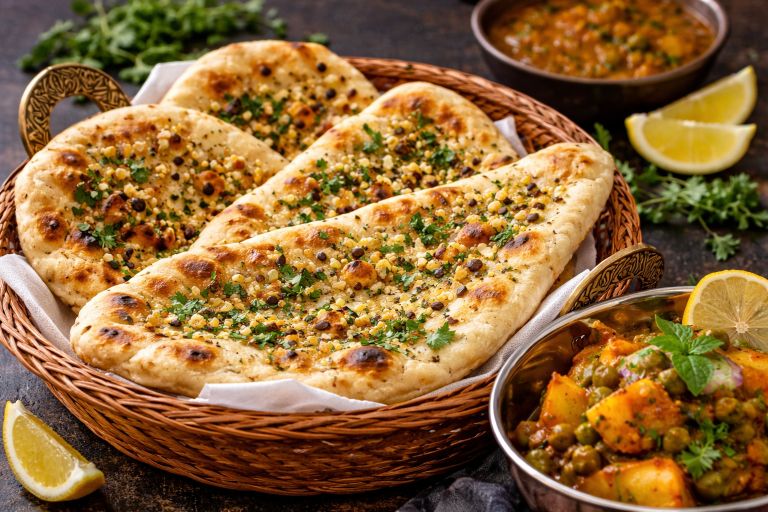
Homemade Naan Recipe – Soft, Fluffy Indian Flatbread
Unleashing the Flavors of Homemade Naan
This homemade naan recipe shows you how to make soft and fluffy Indian tandoor bread easily at home. This is an essential part of Indian cuisine. Traditionally baked in a clay oven called a tandoor, this delicious flatbread pairs perfectly with rich curries and flavorful gravies. Moreover, naan has become a beloved staple not only in India but also across the world.
Originally introduced in the royal Mughal kitchens, naan quickly gained popularity due to its fluffy texture and rich taste. Over time, however, this royal bread moved beyond palace kitchens and eventually became a common favorite in homes, dhabas, and restaurants. Today, it continues to delight food lovers everywhere.
In this guide, therefore, you will learn how to make traditional homemade naan, along with several popular variations that can elevate your dining experience.
How Naan Was Invented
The origins of naan can be traced back to the Mughal courts, where royal chefs experimented with Persian cooking techniques and local South Asian ingredients. Initially, they prepared a dough using flour, yogurt, and yeast to create a soft and elastic texture.
Afterward, the dough was baked inside clay ovens known as tandoors, which produced the signature puffed bread with slightly charred edges. Consequently, the result was a soft, fluffy bread with a distinctive smoky aroma.
Because naan paired beautifully with rich curries, kebabs, and gravies, it soon became a royal favorite among Mughal emperors. Over time, regional adaptations refined the recipe, and eventually naan evolved into a versatile bread enjoyed by people across India and beyond.
History of Naan
Naan originated in South Asia and gradually developed into a staple bread during the Mughal era. Persian culinary influences significantly shaped its preparation style as well as its flavor profile.
Traditionally, chefs baked naan in tandoor ovens, which allowed the bread to cook quickly while developing a slightly crisp exterior. Meanwhile, the inside remained soft and pillowy.
As time passed, naan slowly moved beyond royal kitchens and began appearing in street-side dhabas, restaurants, and household kitchens. Consequently, it became an integral part of Indian cuisine.
Today, naan represents a perfect blend of ancient culinary traditions and modern creativity, and it continues to be enjoyed worldwide.
Popularity of Naan
Interestingly, naan was once considered a specialty bread mainly served in roadside dhabas and small eateries. However, its delicious taste and versatility soon captured the hearts of food lovers everywhere.
Over the years, naan has transformed into one of the most recognizable symbols of Indian cuisine. Whether served alongside rich North Indian gravies or incorporated into modern fusion dishes, its popularity continues to grow.
Furthermore, naan plays a vital role in bringing people together around the dining table. Because of its ability to complement a wide range of dishes, it remains a favorite among food enthusiasts across India and abroad.
Best Naan Across North India
North India is famous for its exceptional naan-making traditions. Therefore, here are five must-visit places where you can experience some of the best naan in the region.
1. Kake Da Hotel, Delhi
Located in Connaught Place, this legendary eatery is well known for its buttery and fluffy naans. In addition, the naans are cooked in a traditional tandoor, which gives them a smoky flavor that pairs perfectly with robust Punjabi curries.
2. Amritsari Kulcha Land, Amritsar
Although this restaurant is famous for its kulchas, it also serves excellent stuffed naan filled with spiced potatoes or paneer. Moreover, these naans are typically served with tangy chutney and chole, making them a must-try for food lovers.
3. Karim's, Old Delhi
Located near Jama Masjid, Karim's is an iconic restaurant known for its rich Mughlai dishes. Along with its famous curries, the restaurant serves beautifully baked tandoori naans that have delighted diners for generations.
4. Pind Balluchi, Chandigarh
This Punjabi-themed restaurant chain offers soft and flavorful naans that perfectly complement classic dishes like butter chicken and dal makhani. As a result, it remains a popular destination for traditional North Indian meals.
5. Bharawan Da Dhaba, Amritsar
Finally, Bharawan Da Dhaba provides an authentic dhaba experience. Here, generously buttered naans are served hot alongside spicy gravies, creating a truly satisfying meal.
Together, these establishments showcase the rich diversity and craftsmanship of North Indian naan-making traditions.
Classic Naan Recipe
Preparation Time: 20 minutes (plus 2–3 hours proofing)
Cooking Time: 10 minutes
Serves: 6
Ingredients for the Dough
- 3 cups all-purpose flour (maida)
- 1 teaspoon active dry yeast
- ½ cup warm water
- ⅓ cup yogurt
- ⅓ cup milk
- 1 tablespoon sugar
- 1 teaspoon salt
- 2 tablespoons oil or melted butter
For Cooking the Naan
- Ghee or butter (as needed)
- Optional toppings: garlic, cilantro, sesame seeds, nigella seeds
Instructions to Make Homemade Naan
Activate the Yeast
First, combine warm water, sugar, and yeast in a small bowl. Then allow the mixture to rest for 5–10 minutes until it becomes frothy.
Prepare the Dough
Next, place the flour and salt in a large mixing bowl. Afterward, add yogurt, milk, oil, and the activated yeast mixture.
Mix everything together until a sticky dough forms. Then knead the dough for 8–10 minutes until it becomes smooth and elastic. If necessary, add a little flour to reduce stickiness.
Proof the Dough
After kneading, cover the dough with a damp cloth. Then allow it to rise in a warm place for 2–3 hours until it doubles in size.
Divide and Roll
Once the dough has risen, gently punch it down to release air. Next, divide it into six equal portions and shape each portion into a ball.
Then roll each ball into an oval or teardrop shape about ¼ inch thick.
Cooking the Naan
Tandoor Method
Traditionally, the rolled dough is slapped onto the hot walls of a tandoor. As it cooks, the naan puffs up and develops golden-brown spots.
Tawa Method
Alternatively, heat a tawa or skillet on high heat. Place the rolled naan onto the hot surface. Once bubbles appear, flip it and cook the other side until golden.
Oven Method
Preheat the oven to 500°F (260°C). Place the naan on a baking sheet or pizza stone and bake for 4–5 minutes. Finally, broil for one minute to achieve a charred finish.
Before serving, brush the hot naan with butter or ghee.
Varieties of Naan / Flatbread
Garlic Naan
- Topping: Minced garlic and chopped cilantro
- Taste: Aromatic with a mild tang
Butter Naan
- Topping: Generous melted butter
- Taste: Rich and creamy
Cheese Naan
- Filling: Mozzarella or processed cheese
- Taste: Gooey and indulgent
Stuffed Naan
- Stuffing: Spiced potatoes, paneer, or vegetables
- Taste: Hearty and flavorful
Keema Naan (Non-Vegetarian)
- Stuffing: Spiced minced meat
- Taste: Robust and savory
Whole Wheat Naan
- Dough: Made with whole wheat flour
- Taste: Nutty and wholesome
Herbed Naan
- Topping: Fresh or dried herbs like oregano or thyme
- Taste: Earthy and fragrant
Tips for Perfect Naan
✔ Use high heat: High temperatures help create the soft interior and charred exterior.
✔ Avoid over-kneading: Overworking the dough can make the naan tough.
✔ Add toppings generously: Especially for garlic or herb naan, even distribution enhances flavor.
Final Thoughts
Naan is truly the perfect companion for rich curries and comforting lentil dishes such as butter paneer or dal makhani. Moreover, its versatility allows it to be enjoyed in many delicious variations.
Whether prepared in its classic form or with creative toppings, naan continues to be an irreplaceable part of Indian cuisine.
Try this recipe at home and share your experience with us.
Tag us on Instagram @thefood.travellers and let us see your delicious creations!
Comments are closed.