

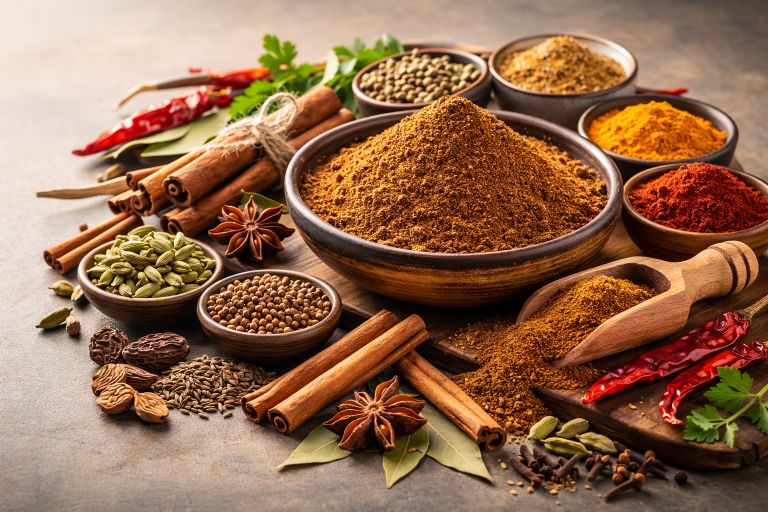
Garam masala is the one spice blend I never buy from a store because the homemade version is so much better. My mother taught me to make it by dry-roasting whole spices — cinnamon, cardamom, cloves, cumin, and black pepper — until the kitchen filled with the most incredible aroma, then grinding them together while still warm.
The difference between freshly ground garam masala and the pre-packaged kind is enormous — fresh garam masala has a warmth and depth that the store-bought powder simply cannot match. I make a small batch every month and store it in an airtight jar, and it finds its way into almost everything I cook.
This post is my guide to understanding this essential spice blend — its history, what goes into it, and why making it at home is worth the ten minutes it takes.
The roots of garam masala trace back thousands of years to the Indian subcontinent, where spices were cherished not just for their flavour but also for their medicinal properties. The name itself translates to "warm spice blend," a reference to the warming effect these spices are believed to have on the body according to Ayurvedic principles.
Every Indian household has its own version — the spices, the ratios, and the roasting time all vary from family to family, and that personal touch is part of what makes garam masala so special.
History of Garam Masala:
The roots of this trace back thousands of years to the Indian subcontinent, where people cherished spices not only for their culinary value but also for their medicinal properties. The term "Garam Masala" itself translates to "warm spice blend," acknowledging the spices' believed warming effect on the body according to Ayurvedic principles. People generally ask whether garam masala is spicy or flavorful. The answer is that it can be flavorful but can be too pungent if not used properly. If the heat from the chilli is more, then it can become spicy.
Ancient Spice Trade:
India's strategic location at the crossroads of trade routes fueled the influx of various spices, fostering a melting pot of flavours. The spice trade, linking India with regions as distant as the Middle East, Africa, and Southeast Asia, significantly influenced the development of Garam Masala. Merchants from diverse cultures introduced an array of spices, which gradually merged over time to form the aromatic blend now recognised as Garam Masala.
Key Ingredients:
Regionally and even among households, people vary the exact composition while cooking with garam masala, but some key spices fundamentally make up its core. These core ingredients include:
1. Cardamom (Elaichi):
Cardamom, known as the "Queen of Spices," is revered for its sweet, floral aroma and versatile flavour profile. Native to India, it boasts a unique combination of citrus and eucalyptus notes, contributing a delightful freshness to top Indian dishes using garam masala. Whether ground or used as whole pods, cardamom is a key player in both sweet and savoury recipes. It is used from rich desserts to aromatic biryanis.
2. Cinnamon (Dalchini):
Originating from the inner bark of trees, cinnamon is a spice mix for Indian recipes that adds a touch of sweetness and warmth to top Indian dishes using garam masala. Cinnamaldehyde provides it with a unique, soothing scent, balancing sweetness and spice perfectly. With its rich, nuanced flavour, cinnamon serves as a versatile spice usable in both powder and stick forms, enhancing everything from chai tea to savoury stews.
3. Cloves (Laung):
With their intense and pungent flavour, cloves contribute a robust depth to the Garam Masala blend. These dried flower buds infuse the mix with a slightly bitter, sweet, and peppery taste. Beyond culinary applications, cloves also receive acclaim for their medicinal properties, recognised for their antioxidant and anti-inflammatory benefits.
4. Black Peppercorns (Kali Mirch):
The humble black peppercorn, a staple in kitchens worldwide, contributes more than just heat to Garam Masala. Packed with piperine, black pepper not only delivers a spicy kick but also enhances the overall depth of flavour. Its versatility ranges from seasoning to medicinal use, potentially benefiting digestion and nutrient absorption.
Additional 3 Key Spices in Garam Masala:
5. Cumin (Jeera):
Cumin, renowned for its earthy and warm profile, brings a distinctive flavour to the masala. The spice is characterised by its nutty undertones and hints of citrus, making it a vital component in Indian, Middle Eastern, and Latin American cuisines. Ground cumin elevates the overall complexity of the spice blend, enhancing the savoury notes in a variety of dishes.
6. Coriander (Dhania):
The seeds of the coriander plant give this masala a hint of citrus and lemon. They provide a bright, fresh accent that balances the other spices and enhances the overall flavour profile. Coriander is a versatile spice often utilised in both powdered and whole forms. It complements a wide range of dishes, including pickles and curries.
7. Nutmeg (Jaiphal) and Mace (Javitri):
The same fruit produces nutmeg and mace, imparting Garam Masala with its warm, sweet, and nutty flavour. Nutmeg, with its rich and enticing taste, is often grated into mixtures, while mace—the lacy coating of the nutmeg seed—contributes a subtle yet potent scent. When blended, they introduce nuance and richness that enhance these essential Indian pantry spices into a delightful taste in both savoury and sweet recipes.
The Spice Blending Art:
Creating Garam Masala involves an art form passed down through generations. Traditionally, individuals roast whole spices to release their essential oils, enhancing their flavours. They then grind the roasted spices into a fine powder, producing a versatile spice blend suitable for use in various dishes, from savoury curries to sweet desserts.
Culinary Uses:
As Garam Masala travelled across the diverse culinary landscapes of India, it gave rise to regional variations. The north might prefer a stronger and spicier blend, while the south could incorporate more coconut and curry leaves, resulting in a milder version. Each regional adaptation mirrors the unique culinary identity and preferences of its people.
Conclusion:
Garam Masala embodies the ancient alchemy of spice blending in India. Its history intertwines the tales of merchants, the cultural significance of garam masala, and the medicinal roots of Ayurveda. Today, this aromatic blend not only lends depth and complexity to Indian cuisine but also permeates kitchens worldwide. It enhances dishes with its captivating fragrance and nuanced flavours. As we relish the magic of Garam Masala, we honour the culinary heritage that persists in evolving and enchanting taste buds globally.
If you're interested in learning more fascinating details about any ingredient, read other blogs on our website.
Comments are closed.