

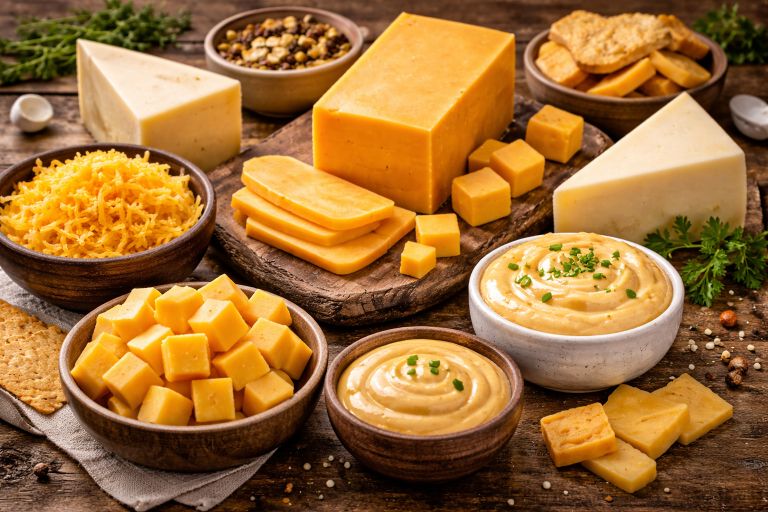
Cheddar Cheese Uncovered:
Cheddar is the cheese I reach for most often in my kitchen because it works in almost everything. It started with grilled cheese sandwiches — I tried several cheeses before landing on cheddar as the one that melts perfectly and has enough flavour to carry the whole sandwich on its own. Over time, I started using it in pasta, parathas, and even some Indian dishes where it has no traditional place but somehow fits. What fascinated me as I explored different varieties is how dramatically cheddar changes with age — a young, mild cheddar tastes buttery and gentle, while an aged one is sharp, crumbly, and packed with intensity. Understanding that range completely changed how I use it in cooking, and this guide is everything I have learned about cheddar along the way.
Cheddar cheese is one of the most versatile and popular cheeses in the world, loved for its rich, tangy flavour and firm yet creamy texture. It is the kind of cheese that fits comfortably into everyday cooking and onto a gourmet cheeseboard with equal ease. What makes cheddar so universally appealing is the range it offers — from mild and buttery when young to sharp and intensely flavoured when aged — which means there is a cheddar for every palate and every dish.
Origins of Cheddar Cheese:
Cheddar cheese originates from the small English village of Cheddar in Somerset, which lies in the southwest of England. It dates back to the 12th century, when local farmers perfected the art of cheesemaking using cow's milk from the region. The cave-ripening process in the Cheddar Gorge caves added to the uniqueness of flavour and texture that characterises this cheese. These caves are cool, humid environments, which favour the ageing of cheese.
By the 17th century, Cheddar cheese had been sought and enjoyed in England and more widely. This popularity boomed as newer production techniques, especially those that the Industrial Revolution implemented, promoted mass production of cheese along with quality consistency.
How Cheddar Cheese Went Viral:
The popularisation of Cheddar cheese from its local origins to a worldwide product owes much to:
Export to New Markets: Cheddar was exported during the expansion of the British Empire to colonies such as the United States, Australia, and Canada, where it became a favourite cheese.
Industrialisation: Improved cheesemaking techniques in the 19th century, like the "cheddaring" process (curds are stacked and turned to remove whey), enabled mass production.
Versatility in Recipes:
Cheddar's rich flavour and melting capabilities easily made it a popular addition to both old and new recipes, from pies and casseroles to burgers, pizzas and pastas.
Accessibility and Affordability: In contrast to some artisanal cheeses, the mass production of cheddar made it affordable and accessible to many households, and it became a staple item in every household.
Varieties of Cheddar Cheese:
Cheddar cheese is available in a wide range of varieties that suit every palate:
- Mild Cheddar: Ripened for 2 to 3 months, which gives it a soft feel and a creamy, light taste.
- Medium Cheddar: aged between 4 and 6 months to strike a balance between being smooth and having a sharp bite
- Sharp Cheddar: Ripened for about 9 to 12 months and longer, has a firmer texture and a full, tangy flavour.
- Extra-Sharp Cheddar: Ripened for more than one year, these cheeses develop a strong, robust flavour that pairs perfectly with wine and gourmet recipes.
- Smoked Cheddar: These have smoky flavours, making them great for cheeseboards and cooking.
Artisan and Farmhouse Cheddar: These are usually produced in smaller batches, with a focus on the traditional method and unique flavour profiles.
Vegetarian and Vegan Options:
Vegetarian Cheddar Cheese:
Many cheese manufacturers now use vegetarian-friendly rennet rather than animal-derived enzymes. Therefore, the cheese is suitable for vegetarians. However, always check the label to ensure that the type of rennet used corresponds to your dietary preference.
Vegan Cheddar Cheese:
Vegan cheddar alternatives have gained popularity, catering to those who avoid dairy. Made from plant-based ingredients such as cashews, almonds, coconut oil, and nutritional yeast, these cheeses replicate the flavour and texture of traditional cheddar. Popular brands like Violife, Daiya, and Miyoko's offer vegan cheddar slices, blocks, and shreds suitable for cooking or snacking.
The Most Expensive Cheddar Cheese:
The most expensive cheddar cheese is reportedly Wyke Farms Vintage Cheddar, which sells for hundreds of dollars per kilo, depending on the years of ageing and exclusiveness. Cabot Clothbound Cheddar from Vermont, USA, is also vying for the top prize. Cheese connoisseurs highly seek these beautifully aged cheeses, made with traditional methods and featuring an exceptional flavour.
Somerset, England, especially in the Cheddar Gorge region, still manufactures authentic cheddar using traditional methods. The use of local milk and adherence to Protected Designation of Origin (PDO) guidelines make sure that the cheese does not lose its authenticity.
How Cheddar Has Influenced Modern Cooking:
This ingredient has greatly influenced global culinary traditions. Cheddar plays a prime role in mac and cheese, grilled cheese sandwiches, and cheesy casseroles. It is a comfort food providing comfort and richness to all everyday meals.
Fine wines, fruits, and artisan breads complement extra-sharp and aged cheddars.
In Fast Food, melting abilities of cheddar make burgers, pizzas, and nachos very favourite fast-food dishes.
Cheddar Cheese Global Recipes:
Recipes worldwide feature cheddar, from British cheddar pies to American cheese sauces and Australian cheddar biscuits.
In Fusion Cuisine:
Chefs worldwide incorporate cheddar into fusion dishes. Recipes such as cheddar-stuffed parathas, cheddar kimchi quesadillas, and cheddar-infused sushi rolls showcase its versatility.
Conclusion:
More than food, it has been the culinary icon. It is shaping world gastronomy: from a small origin in Somerset, to cheddar being everywhere within all kitchens on earth. And it just keeps growing stronger as cheesemaking and evolving taste will have much more to give. As a traditional kind or alternative kind, in plants, the delicious delight of this cheese stays for a moment, encourages the chefs and brings humans together over food.
Share your comments on our Instagram channel @thefood.travellers
Comments are closed.