

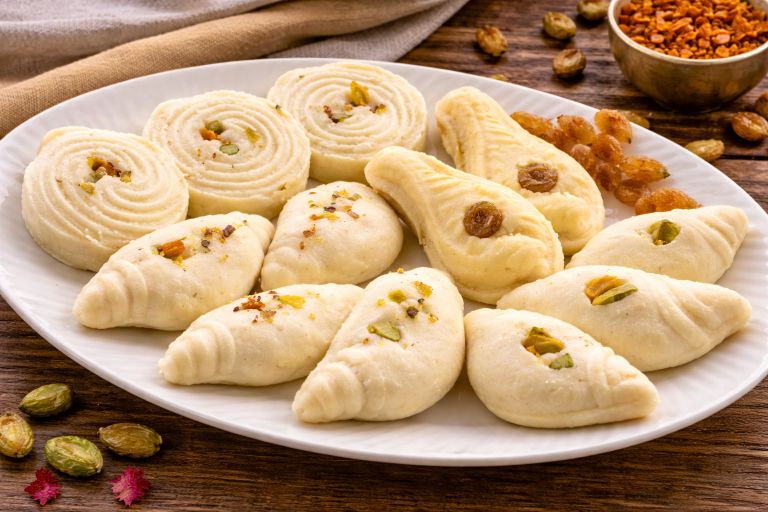
Kolkata's Iconic Sandesh: A Sweet Taste of Tradition
I first tasted proper Bengali sandesh at a colleague's home during Durga Puja celebrations in Bangalore, and it was nothing like the dry, crumbly version I had tried at sweet shops before. Hers was soft, fresh, and barely sweet, with a delicate cardamom fragrance that lingered after every bite. She told me the secret is in the chenna — it has to be made fresh that day, and the kneading has to be gentle and patient until the texture turns completely smooth. When I tried making it at home, my first batch was grainy because I had not kneaded the chenna long enough. The second attempt, where I spent a full ten minutes working the chenna with my palms, came out silky and perfect. This recipe is that version, and it has made me understand why Bengalis consider sandesh not just a sweet but an art form.
Sandesh is one of Kolkata's most iconic desserts and a jewel of Bengali cuisine. It is made from fresh chenna — Indian cottage cheese — that is carefully curdled, strained, and kneaded into a soft, smooth dough. Unlike many Indian sweets that rely on heavy sugar syrup or deep frying, sandesh is delicate and restrained. It lets the freshness of the chenna shine through, with just a touch of sweetness and a whisper of cardamom or saffron on top.
What sets sandesh apart from other Indian desserts is its subtlety. It is light, fresh, and refined — often moulded into beautiful shapes that make it look almost too pretty to eat. For Bengali families, sandesh is not just a sweet but a tradition, deeply tied to celebrations, festivals, and the pride of a culinary heritage that values craftsmanship and simplicity in equal measure.
History:
The history behind Sandesh dates back to the 19th century, when renowned Bengali nobleman, Raja Ram Mohan Roy, introduced the concept of soft cheese in Bengali sweets. But it was the legendary Bengali sweet maker, Nabin Chandra Das, in the early 20th century, who perfected the recipe and turned this iconic dessert into the mouthwatering dessert that is popular today.
In the early times, the elites of Bengal would only enjoy this sweet. The simple dessert has become a part of everyday culture. People of all ages now devour it during festivals and special occasions such as Durga Puja and Poila Boishakh (Bengali New Year).
Variations of Sandesh:
One of the reasons why people love this dessert so much is its versatility. The making of sandesh involves chenna. Many regional modifications have since emerged, enjoyed both by locals and tourists.
- Misti Sandesh: Misti Sandesh is the most common type of dessert. This type of sandesh comes with a flavour of cardamom, sometimes with a hint of saffron, giving an aromatic, subtle taste.
- Chhannar Sandesh: A firmer, drier version made with well-drained chenna, often served in small, bite-sized pieces.
- Aam Sandesh: When mango season comes, this sandesh is very common by incorporating fresh pulp of mangoes; it is the perfect summer sweet to indulge in.
- Sandesh with Gold Leaf: For those looking for a luxurious experience, some varieties of Sandesh are topped with edible gold leaf, adding an elegance to it.
- Koda Pak Sandesh: Koda Pak Sandesh is a rich, traditional Bengali sweet made from chenna, sugar, and khoya. It offers a delightful, caramelised flavour. People call it koda pak sandesh as jalbhara.
- Baked Sandesh: This is the baked version of this mouth-watering sweet. It is firmer and more textured but as delicious as the original.
The making of Kolkata's iconic dessert:
Making Sandesh requires accuracy and patience, and so it is often regarded as an art by Bengali sweet makers. Here is a glimpse into how it is traditionally prepared:
- Chenna Preparation: Fresh milk is boiled, curdled with lemon juice or vinegar, and then strained through a cloth to remove excess water. What remains is soft chenna, the base for Sandesh.
- Flavouring: Chefs knead chenna with sugar, cardamom, or saffron. The amount of sugar varies based on the desired sweetness.
- Moulding: The sweet chenna is then moulded into desired shapes, such as heart-shaped, flower-shaped or even tiny animals. At this stage, creativity unfolds because some sweet makers introduce very intricate designs on the surface.
- Garnishing: Garnished with cardamom, dried fruits or gold leaf, depending upon the occasion. This dessert is ready to reach the customers.
- Serving: People eat Sandesh either chilled or at room temperature. It makes a perfect dessert after a heavy meal or as a treat with a cup of Bengali cha (tea).
Where to Find Sandesh in Kolkata:
If you are visiting Kolkata, the sweet shops around the city are a must-visit to taste the authentic dessert. Some of the most famous places to sample this sweet include:
- K.C. Das: This is one of the oldest and most renowned sweet shops in Kolkata. Since 1866, this shop has been offering sandesh and other Bengali sweets.
- Bhikharam Chandmal: It offers both innovative and traditional flavours of the same classic dessert, sandesh.
- Girish Chandra Dey: Here, you can enjoy various seasonal flavours of Sandesh with one of the popular chains of sweets.
Why You Must Try this dessert:
Sandesh is far from being a dessert. For it is a flavour that is not only savoury but also an experience for your culture. With its melting mouthfeel and subtle taste, it epitomises Bengali cuisine—pure, simple, and yet full of tradition. Whatever your status in this city, you haven't seen Kolkata if you haven't tried this sweet dessert.
In a city which boasts its culinary tradition, Sandesh remains one of the most adorable sweets, carrying with each bite a perfect blend of history, culture, and taste.
Next time in Kolkata, don't miss out on trying some of the best Sandesh Kolkata has to offer. The experience is sweet and amazing!
Share your thoughts on our Instagram channel @thefood.travellers
Comments are closed.