

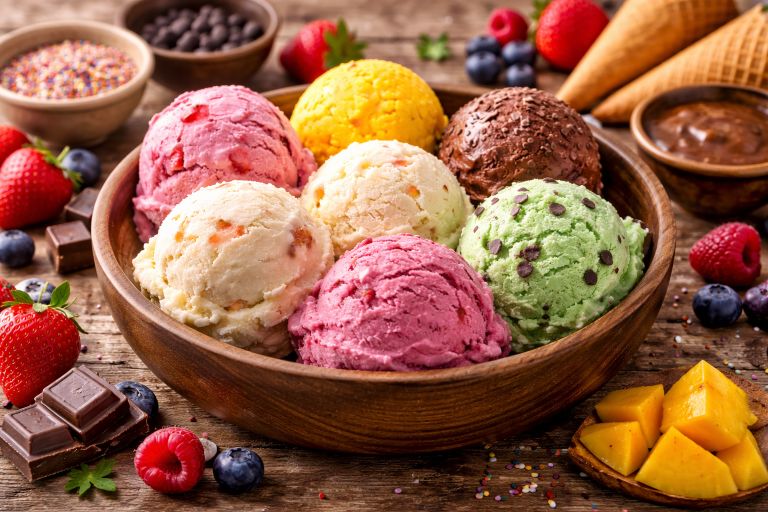
Ice cream developed from early chilled desserts into the churned, creamy treat we know today. Its story crosses Asia, the Middle East, Europe and the Americas, with each region adding new ingredients, techniques and serving traditions.
Early chilled desserts
Long before modern freezers, cooks cooled sweetened milk, fruit and syrups with packed snow or ice. These preparations were laborious and usually reserved for wealthy households or special occasions.
How churning changed the texture
Churning while a mixture froze broke up large ice crystals and incorporated air, creating a smoother dessert. Better access to ice, salt-and-ice freezing and hand-cranked machines gradually made the method more practical.
From luxury to everyday food
Ice cream became widely available as refrigeration, commercial dairies and insulated transport improved. Shops and factories introduced flavours, cones and packaged formats that made it part of everyday life.
How to read the history today
No single country invented every part of ice cream. The modern dessert reflects many older frozen-dessert traditions, later manufacturing advances and regional preferences for milk, cream, fruit, spices and nuts.
Try it thoughtfully
When comparing ice creams, notice the base, sweetness, overrun and flavouring. Small-batch versions often highlight the ingredients, while commercial styles are designed for a stable texture and longer storage.
More sweet recipes
For more dessert inspiration, explore our dessert collection, try Kaju Katli, or browse Sandesh. For a chilled vegan option, see Vegan Panna Cotta.
Comments are closed.