
Pav Bhaji: A Flavorful Icon of Indian Street Food
Pav bhaji is the dish that defines Mumbai street food for me. Growing up, our favourite pav bhaji stall was near Girgaon, and the man who ran it would mash the bhaji on a giant flat tawa with so much butter that the whole thing glistened under the lights. He would toast the pav in the same butter until they were golden and slightly crispy on the edges, and the first bite — the soft pav soaking up the spicy, buttery bhaji — was pure happiness. When I make it at home now, I refuse to go easy on the butter because that is what makes pav bhaji taste like pav bhaji. My first homemade version used too little butter and the bhaji tasted like a regular vegetable mash. The moment I was generous with it, the flavour transformed. This recipe is my attempt to bring that Mumbai stall experience into our Bangalore kitchen.
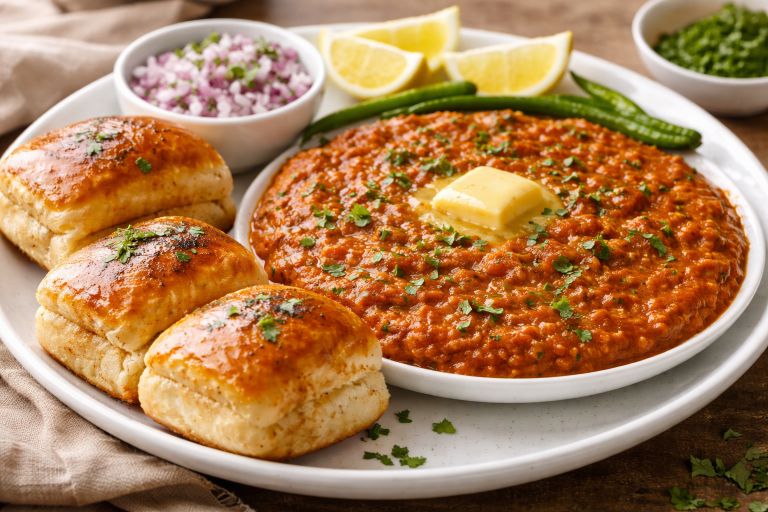
Mumbai-style pav bhaji is one of India's most famous street foods — a rich, spicy vegetable mash served with buttered, toasted bread rolls. It is a combination of onions, tomatoes, potatoes, peas, cauliflower, capsicum, ginger, and garlic mashed together on a hot tawa until everything melds into something bold, vibrant, and deeply satisfying, flavourful bhaji.
What makes pav bhaji irresistible is the butter. It goes into the bhaji while cooking, it toasts the pav until golden, and it ties the whole dish together with a richness that no other ingredient can replicate. Whether you eat it at a bustling Mumbai street stall or make it at home on a quiet weekend, the aroma and taste never fail to bring a smile. It is comfort food at its finest — warm, indulgent, and impossible to eat just one plate of.
The Origin and History of Pav Bhaji
Pav Bhaji originated in Mumbai during the mid-19th century. At that time, textile mill workers needed a quick, affordable, and filling meal during long working hours. Consequently, street vendors created a simple yet nutritious dish by mashing leftover vegetables with spices.
They served this spicy vegetable mash with buttered pav buns. Because the dish required simple ingredients and quick preparation, workers quickly adopted it as a convenient meal. Moreover, its bold flavours made it incredibly popular.
Interestingly, the name itself reflects its components. The word “Pav” refers to the soft bread rolls, while “Bhaji” means a spiced vegetable curry.
Over time, this humble worker’s meal transformed into a global street food sensation. Today, restaurants and street vendors across India and abroad proudly serve their own versions of Pav Bhaji. Consequently, the dish now symbolises the vibrant spirit of Mumbai’s street food culture.
The Perfect Pav Bhaji Recipe
Now that you know its story, let’s learn how to prepare this delicious dish at home.
Ingredients
For the Bhaji
- 2 tablespoons butter (plus extra for serving)
- 1 teaspoon oil
- 1 teaspoon cumin seeds
- 1 large onion, finely chopped
- 2 teaspoons ginger-garlic paste
- 3 large tomatoes, finely chopped
- 2 medium potatoes, boiled and mashed
- ½ cup green peas, boiled
- ½ cup cauliflower, boiled and mashed
- ½ cup capsicum, finely chopped
- 2 tablespoons Pav Bhaji masala
- 1 teaspoon red chili powder
- ½ teaspoon turmeric powder
- Salt to taste
- ½ cup water (adjust if needed)
- Juice of half a lemon
- Fresh coriander leaves, chopped (for garnish)
For the Pav
- 8 pav buns
- 2 tablespoons butter
- 1 teaspoon Pav Bhaji masala
Preparation Time
- Prep Time: 20 minutes
- Cooking Time: 30 minutes
- Total Time: 50 minutes
Instructions
1: Prepare the Bhaji
First, heat butter and oil in a large pan over medium heat. Once the butter melts, add cumin seeds and allow them to crackle. This step releases their aromatic oils.
Next, add the chopped onions and sauté them until they turn golden brown. Meanwhile, stir in the ginger-garlic paste and cook it for about one minute to enhance the flavor.
After that, add the chopped tomatoes. Continue cooking until they soften and form a thick mixture.
Now add the boiled vegetables—potatoes, peas, cauliflower, and capsicum. Mix everything well so the flavours combine evenly.
Then sprinkle Pav Bhaji masala, red chilli powder, turmeric powder, and salt. Stir thoroughly.
Using a potato masher, mash the vegetables while gradually adding water. As a result, the mixture develops a smooth yet slightly chunky texture.
Finally, let the bhaji simmer for about 10 minutes. Finish by adding lemon juice and fresh coriander leaves for brightness and aroma.
2: Prepare the Pav
Meanwhile, slice the pav buns horizontally.
Next, heat a skillet and melt some butter. Place the buns on the skillet and toast them until they turn lightly crisp and golden.
Afterwards, sprinkle a small pinch of Pav Bhaji masala on the buns for extra flavour.
3: Serve the Pav Bhaji
Serve the hot bhaji in a bowl and add a small dollop of butter on top.
Then place the buttered pav alongside the bhaji. Additionally, serve chopped onions, lemon wedges, and fresh coriander on the side.
Together, these accompaniments enhance the flavour and add freshness to the dish.
Where to Find the Best Pav Bhaji
Although homemade Pav Bhaji tastes amazing, many famous restaurants and street vendors serve exceptional versions of this dish.
Best Places in India
Sardar Refreshments, Mumbai
This legendary spot serves rich, buttery Pav Bhaji packed with bold flavours.
Cannon Pav Bhaji, Mumbai
Located near CST Station, this eatery attracts locals and tourists who crave authentic street-style Pav Bhaji.
Shiv Sagar, Bangalore
This restaurant offers perfectly spiced Pav Bhaji with generous butter.
Elco Market, Mumbai
Food lovers appreciate its hygienic preparation and classic Mumbai street food taste.
Manek Chowk, Ahmedabad
This bustling street food hub serves some of Gujarat’s most popular Pav Bhaji late into the night.
Arya Bhavan, Chennai
Here, chefs add subtle South Indian spices to create a unique twist on the classic dish.
Best Places Abroad
Dishoom, London
This famous restaurant recreates Mumbai’s street food flavours beautifully.
Taj Restaurant, New York
Visitors often praise its authentic Indian Pav Bhaji.
Curry Culture, Singapore
This restaurant presents a refined yet traditional version of the dish.
Bombay Street Food, Toronto
A popular destination for authentic Indian street food lovers.
Why Pav Bhaji Remains a Favourite
Pav Bhaji continues to win hearts because of its versatility and bold flavours. For instance, people enjoy it as a quick snack, a filling meal, or even a party dish.
Moreover, cooks easily adapt the recipe according to personal taste. Some prefer extra butter, while others add more vegetables or spices.
Consequently, this dish has become a staple not only in Mumbai but also in homes and restaurants around the world.
Final Thoughts
From its humble beginnings as a quick meal for mill workers to its status as a global street food icon, Pav Bhaji reflects the creativity and richness of Indian cuisine.
Whether you enjoy it at a lively street stall in Mumbai or prepare it in your own kitchen, the dish always delivers comfort and bold flavour.
So go ahead—try making this spicy delight at home. Alternatively, explore famous street food destinations and taste the best versions of Pav Bhaji.
And finally, don’t forget to share your experiences and favourite spots in the comments.
Share your thoughts and food experiences on Instagram @thefood.travellers
Comments are closed.