

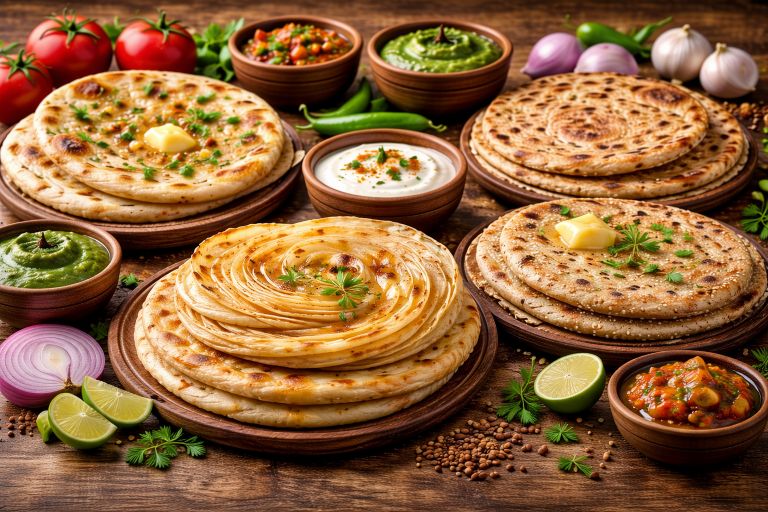
The Various Indian Parathas or Flatbreads: A Gastronomical and Cultural Journey
Parathas are the one Indian bread I never get tired of, because every region makes them differently and each version tells its own story. Growing up in Mumbai, our weekday parathas were simple — plain or with a light stuffing of potatoes or cauliflower. But once I started travelling across India with Harish, I discovered just how vast the world of parathas really is. Lachha parathas in Punjab, stuffed mooli parathas at highway dhabas, flaky Malabar parathas in Kerala, and puran poli in Maharashtra during festivals — every state had its own signature flatbread that reflected the local ingredients and traditions. This post is my attempt to document the incredible variety of Indian parathas and flatbreads I have encountered, eaten, and learned to make in my own kitchen over the years.
Indian breads are far more than simple accompaniments to a meal. They reflect the rich culinary traditions, regional diversity, and cultural heritage of a country where every state has its own distinctive approach to bread-making. From soft naan cooked in smoky tandoors to crispy, layered parathas prepared on hot griddles, Indian flatbreads showcase a remarkable range of flavours, textures, and techniques.
What makes this diversity so fascinating is how regional ingredients and cooking methods shape each bread. Every state and community contributes its own style — the stuffings change, the flours change, the cooking methods change — and the result is an astonishing variety that goes far beyond what most people imagine when they think of Indian bread. Exploring these flatbreads is both a food journey and a cultural one, connecting ancient cooking traditions with the way families eat today.
A Brief History of Indian Breads
The tradition of bread-making in India dates back thousands of years. Early civilisations cultivated grains such as wheat, barley, and millets, which naturally led to the development of flatbreads.
Archaeological discoveries from the Indus Valley Civilisation, which existed between 3300 BCE and 1300 BCE, provide evidence of grinding stones used to process grains. Because people ground grains into flour, they likely prepared simple flatbreads as part of their daily diet. At that time, these breads probably lacked leavening agents, so they remained basic yet nourishing.
As civilisations expanded and trade routes developed, culinary techniques evolved as well. Consequently, the variety of Indian breads gradually increased. Cultural exchanges introduced new cooking styles, spices, and grains, which enriched local food traditions.
Later, the Mughal Empire, which ruled from 1526 to 1857, significantly influenced Indian bread culture. During this period, the introduction of the tandoor, a clay oven originally from Central Asia, transformed bread-making in North India. This innovation allowed cooks to prepare breads such as naan and kulcha with distinctive smoky flavours.
Over time, communities adapted these techniques according to their local climates, agricultural produce, and food preferences. As a result, India developed an extraordinary variety of breads. Each region created its own specialities, which continue to represent local traditions and culinary identity today.
The Role of Breads in Indian Culture and Customary Norms
Indian breads form an integral part of the culture of the country. It is not merely a means to fill the growling tummies but rather a medium for communication and joyous interaction with great hospitality. Whether it is the rotis of a rural farmer's meal or the naans of a royal feast, breads form an indispensable constituent of every meal in India. They epitomise the quintessence of "annam," a Sanskrit word for food that symbolises nourishment and blessings.
That food is a collective activity is well reflected in the tradition of communal bread-making, especially in villages. It is a common sight to see women getting together to prepare bread for occasions relating to the family or community, thus fostering a sense of togetherness. Indian breads also bear religious significance in certain rituals, mainly during festivals and offerings to deities.
Exploring the Indian Breadbasket
Indian cuisine, at best, is a delightful tapestry of flavours, and so is its breadbasket. Every region of India boasts bread that speaks differently of its uniqueness and the rich richness of the country's culinary heritage. From the fluffy naan of North India to the crisp appam of the South, every bread there tells a story of tradition and culture.
Alternatives for Indian bread include the following: in the Indian bread basket, naan, kulcha, and paratha are very popular breads, mostly eaten with curries and dals. Naan, baked in a tandoor, is always soft, pillowy and perfect to scrape creamy gravies from. Kulcha has layers, filled mostly with spiced ingredients. Parathas are usually stuffed or plain and can be used as a side bread to pickles or yoghurt.
Going west, Rajasthan brings missi roti based on gram flour and spices. East of the river, people fry luchi, the unleavened flatbread, until it turns crispy and golden, using it to mop up the rich Bengali curries. In the south, it is appam, which consists of a rice batter mixed with coconut milk, which goes well with spicy stews.
Exploring these breads is like travelling through the culinary map of India, each bite offering a glimpse of the region's soul. The Indian bread basket is a testament to the country's love for flavour and innovation in its cuisine.
Naan: King of the Tandoori Breads
- Origin: Naan originated from Persia, where it found its first mention in medieval texts. It was the Mughals who popularised it in India, making it appear regularly in royal kitchens.
- Preparation: This is made by mixing all-purpose flour with curd and yeast. This is usually cooked in a tandoor where it cooks instantly and develops a characteristic smoky flavour.
- Varieties: Butter naan, garlic naan, and stuffed naans like keema naan.
- Cultural Significance: Naan is an indulgent type of flatbread. This is mainly for special occasions, mostly accompanied by rich curries such as butter chicken or paneer makhani.
(Additional sections for Kulcha, Missi Roti, Paratha, Roomali Roti, Bhakri, Thepla, Regional Specialities, and techniques and tools continue with similar formatting and details.)
Modern Twists on Indian Breads
Today, chefs and home cooks experiment with Indian breads, adding international flavours and techniques:
- Whole-grain Naans: For those health-conscious diners.
- Cheese-stuffed Parathas: A fusion favourite.
- Herbed Kulchas: Laced with rosemary, thyme, or oregano.
The best Parathas/flatbreads in India:
The 5 best parathas/flatbreads / a variation in India's breadbasket
India's bread avatars are a treasure trove of flavours. As an essential constituent of its diverse cuisine, Indian bread varieties stand out to enliven their taste, utility, and the resultant cultural legacy. Among the hundreds of various breads adorning the Indian dining table, some are considered par excellence due to their taste, versatility, and cultural importance. Here is a glimpse into the top five parathas and breads of India's breadbasket.
Tandoori Roti (North India)
Tandoori roti, one of the most popular North Indian breads, is a traditional flatbread cooked in a clay tandoor oven. Made with whole wheat flour, it boasts a smoky aroma, crisp edges, and a soft centre. This versatile bread perfectly complements rich curries, kababs, and dals, the rustic charm of Indian cuisine.
Laccha Paratha (North India)
Laccha paratha is the first type of flatbread with layers, which is created by repeatedly rolling and folding the dough to create its signature flaky texture. Traditionally cooked in ghee or oil, this bread forms a staple in most Indian restaurants. Those restaurants that serve heavy curries such as butter chicken or paneer makhani combine this type of paratha. The technique to achieve the unique layers is almost an art form, and therefore a classic favourite for people who enjoy a touch of finesse in their meals.
Kerala Parotta (South India)
This is the multi-layered flatbread of a Southern superstar, made with all-purpose flour. It is Famous for its chewy texture and buttery layers. Kerala parotta is one of the most popular street foods in Kerala and Tamil Nadu. For achieving the ideal pliability, the dough is kneaded and rolled into thin sheets, folded, and then coiled. Kerala parotta is served as spicy meat or vegetarian curries, resulting in a perfect expression of South India's culinary craftsmanship.
Naan (Across India)
Naan, a classic Indian bread, is a soft, leavened flatbread traditionally cooked in a tandoor. Its pillowy texture and slightly charred flavour make it a favourite accompaniment to creamy curries and grilled dishes. Often enriched with butter or garlic, naan embodies the perfect blend of simplicity and indulgence in Indian cuisine.
Bajra Roti (West India)
Pearl millet flour is the main ingredient for this type of paratha. Produced mainly in the states of Rajasthan and Gujarat, this heartful and nutrient-rich bread represents India's rural cuisine. Its slightly coarse texture and nutty flavour combine well with rustic dishes. Bajra roti is very valuable for its health benefits. It is gluten-free and rich in dietary fibre.
A Feast of Diversity
Every bread in India is a unique blend of culture, history, and culinary artistry. Be it any type of paratha or flatbread, the senses' taste buds to India's rich traditions. A journey through them is not just about food-it's experiencing India in one little bite, experience after experience.
The breadbasket Pairing Tips:
Do read our blog on Dal Makhani: Creamy Lentils and Soulful Spices, which goes so well with this Assorted Indian Breadbasket combined with the starter called Hara Bhara Kabab: Spinach-filled patties, bursting with flavour. You can even try these with Aloo Paratha.
Comments are closed.