

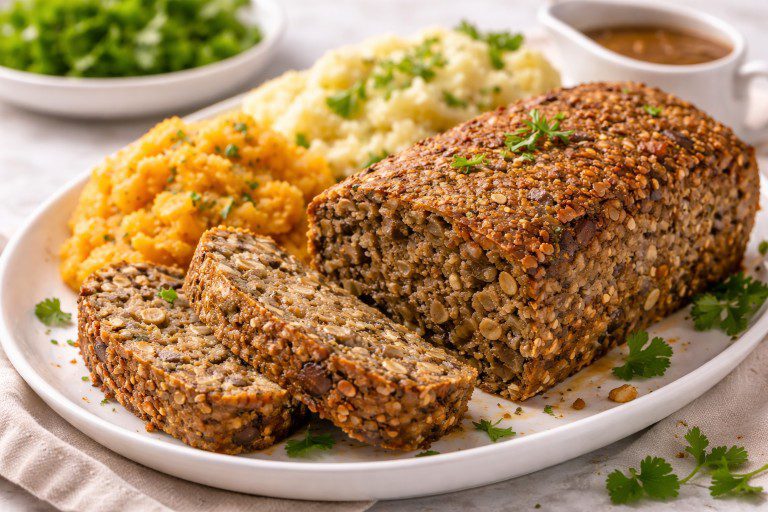
A Creative Alternative to the Traditional Scottish Dish
I had never heard of haggis until I went down a rabbit hole of traditional Scottish food while researching lesser-known dishes from around the world. The original version uses sheep offal, which was obviously not an option for me, but the combination of oats, spices, and earthy flavours sounded like something that could work beautifully in a plant-based version. My first attempt used too many lentils and not enough oats, so the texture was more like a dal than a haggis. The second version, with a better balance of mushrooms, oats, and lentils, had that rich, savoury depth I was going for. It is now one of the most interesting recipes on this blog — something genuinely different that always surprises people who try it.
Haggis is widely recognised as Scotland's national dish, and for centuries it has symbolised resilience, identity, and bold character. The traditional version is made with oatmeal, spices, and offal, reflecting Scotland's deep-rooted culinary heritage. But as plant-based eating has grown in popularity, vegan haggis has emerged as a modern adaptation that stays true to the spirit of the original while being completely cruelty-free.
What I find fascinating about haggis is how much history and culture sit behind a single dish. In this recipe, I share the origins of haggis, its cultural importance in Scotland, and a plant-based version that brings together earthy mushrooms, hearty oats, and warming spices into something that feels both traditional and fresh at the same time.
Origins of Haggis
A Recipe Born of Necessity
Historically, haggis was created out of practicality rather than luxury. In early Scotland, communities relied on resourcefulness to minimise waste. Therefore, the sheep’s heart, liver, and lungs were minced and combined with oats, onions, and spices. The mixture was then encased in the animal’s stomach and boiled.
As a result, haggis became a staple for farmers and rural households. Not only did it utilise every part of the animal, but it also provided nourishment during harsh winters. Thus, it stands as a powerful example of culinary ingenuity born from necessity.
Name and Early References
The word “haggis” is believed to derive from the Old Norse word höggva, meaning “to chop.” This connection highlights the preparation method itself. Although references to haggis appear in Scottish literature as early as the 15th century, its fame truly expanded in 1786.
At that time, Scotland’s national poet, Robert Burns, immortalised the dish in his poem Address to a Haggis. Through his verses, Burns celebrated haggis not merely as food, but as a symbol of Scottish pride and community spirit. Consequently, haggis became deeply embedded in national identity.
Cultural Significance of Haggis
A Symbol of Scotland
Haggis is far more than a recipe. Instead, it represents Scotland’s traditions and heritage. Every year on January 25th, Burns Suppers are held to celebrate Robert Burns’ birthday. During these events, the ceremonial presentation of haggis, accompanied by bagpipes and poetry recitals, remains a highlight.
Therefore, haggis continues to unite people through ritual and remembrance.
Simple Yet Ingenious
Although its ingredients may appear humble, haggis exemplifies extraordinary creativity. By transforming basic components into a flavorful dish, Scots demonstrated resourcefulness and culinary skill. Moreover, the meal reflects values of thrift, land connection, and shared community meals.
As a result, haggis remains both culturally meaningful and historically relevant.
The Evolution of Vegan Haggis
Meeting Contemporary Demands
In recent decades, plant-based diets have gained momentum worldwide. Consequently, traditional dishes have been thoughtfully reimagined to align with ethical, environmental, and health-conscious values. Vegan haggis, therefore, recreates the hearty, spiced flavours of the original using plant-based ingredients.
Through this adaptation, the dish becomes accessible not only to vegans and vegetarians but also to those seeking sustainable alternatives.
Core Ingredients of Vegan Haggis
Instead of offal, vegan haggis typically incorporates lentils, mushrooms, oats, and nuts. These ingredients replicate both the texture and umami depth of the traditional version. Meanwhile, spices such as black pepper, nutmeg, coriander, and thyme preserve its characteristic warmth.
Thus, the essence of haggis remains intact, even as its ingredients evolve.
Vegan Haggis Recipe
Ingredients
Proteins and Base
- 1 cup green or brown lentils (cooked)
- 1 cup mushrooms (finely chopped)
Grains and Fillers
- ½ cup steel-cut oats
- ½ cup chopped walnuts or sunflower seeds
- ½ cup breadcrumbs
Vegetables
- 1 onion (finely chopped)
- 1 carrot (grated)
- 1 celery stalk (finely chopped)
Spices and Seasonings
- 1 tsp ground coriander
- ½ tsp nutmeg
- 1 tsp black pepper
- Salt to taste
- 1 tsp fresh thyme
Liquid and Flavour Enhancers
- ½ cup vegetable stock
- 1 tbsp soy sauce
- 2 tbsp olive oil
Preparation Time
Prep Time: 20 minutes
Cook Time: 45 minutes
Total Time: 1 hour 5 minutes
Step-by-Step Instructions
1. Prepare the Ingredients
First, cook the lentils according to package instructions. Meanwhile, chop the mushrooms, onion, carrot, and celery. Then, toast the oats in a dry skillet until lightly golden and aromatic.
2. Sauté the Vegetables
Next, heat olive oil in a large skillet over medium heat. Add onions, carrots, and celery, and sauté until softened. Afterwards, incorporate the mushrooms and cook until they release moisture and begin to brown.
3. Combine the Mixture
Now, stir in the cooked lentils, toasted oats, walnuts, and breadcrumbs. Subsequently, add spices, thyme, soy sauce, and vegetable stock. Mix thoroughly until the ingredients bind together.
4. Shape and Bake
Preheat the oven to 375°F (190°C). Then, transfer the mixture into a greased loaf tin or shape into patties. Bake for 30–35 minutes until firm and lightly browned.
5. Serve
Traditionally, vegan haggis is served with mashed potatoes (tatties), mashed turnips (neeps), and vegan gravy. Additionally, a sprinkle of fresh parsley adds a vibrant finishing touch.
Vegan Haggis in Modern Cuisine
A Celebration of Sustainability
Because vegan haggis eliminates animal products, it aligns with sustainable food practices. Lentils, oats, and nuts require fewer environmental resources compared to meat production. Therefore, this adaptation supports eco-conscious living while honouring tradition.
Versatility and Innovation
Furthermore, vegan haggis has inspired creative interpretations worldwide. For instance, chefs now prepare haggis-stuffed mushrooms, burgers, and filo pastries. As a result, the dish continues to evolve while retaining its core flavours.
Bridging Cultures
Today, vegan haggis enjoys global recognition. Not only does it introduce Scotland’s culinary heritage to international audiences, but it also demonstrates how tradition can adapt without losing authenticity.
Cultural Representation and Global Appeal
A Dish That Unites
Importantly, vegan haggis allows people from diverse dietary backgrounds to participate in Scotland’s traditions. Consequently, it promotes inclusivity while preserving cultural celebration.
An Ethical Modern Alternative
As more individuals prioritise health, sustainability, and compassion, food innovation becomes essential. Vegan haggis, therefore, retains the spirit of the original dish while embracing modern values.
Conclusion
Vegan haggis beautifully illustrates how food can evolve while honouring its cultural roots. By reimagining Scotland’s national dish with plant-based ingredients, tradition and innovation coexist seamlessly.
Whether enjoyed at a Burns Supper or prepared as a comforting home meal, vegan haggis reflects Scotland’s resilience and creativity. Ultimately, it proves that culinary heritage can adapt thoughtfully to meet the needs of a changing world.
Share your thoughts on Instagram @thefood.travellers
Comments are closed.