
Introduction: What Is Focaccia?
I fell in love with focaccia at an Italian café in Bangalore, served warm slices with olive oil and balsamic vinegar on the side. The bread was so soft inside and so crisp on top that I could not believe it was made from such a simple dough. My first attempt at home was a disaster — I rushed the rising time and ended up with something flat and dense. The second attempt, where I let the dough rest properly and was generous with the olive oil, came out perfectly. This recipe is the second attempt, and I now make it almost every time we have friends over because it looks impressive but is surprisingly forgiving to bake.
Focaccia is one of Italy's most beloved breads, and it deserves just as much attention as pizza. It is soft and airy on the inside, beautifully crisp on the outside, and generously flavoured with olive oil, fragrant herbs, and seasonal vegetables. What sets it apart from pizza is its thickness — focaccia is taller and lighter in texture, which makes it incredibly versatile. You can serve it as a side dish, use it as a sandwich base, or simply tear off a piece and dip it in olive oil and balsamic vinegar.
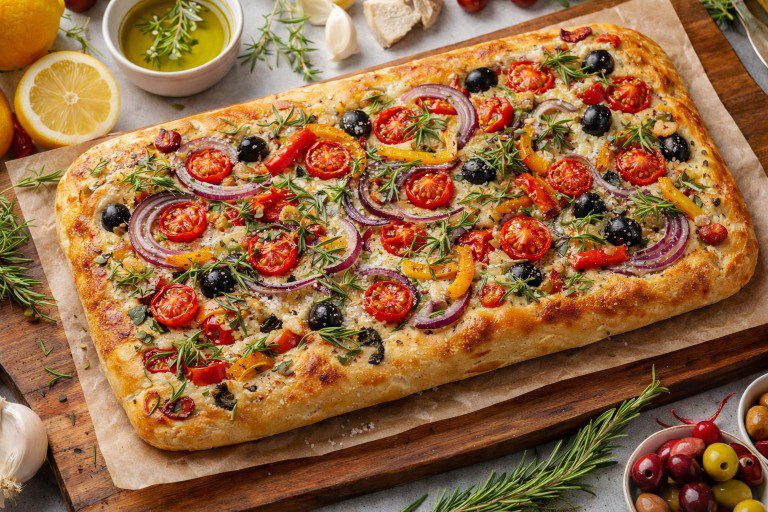
In this recipe, a light olive oil dough is topped with vibrant cherry tomatoes, bell peppers, olives, and red onions. Rosemary, garlic, and a generous sprinkle of sea salt finish it off, and the aroma that fills the kitchen while it bakes is reason enough to try it. Every bite is deeply satisfying, and the whole thing comes together more easily than you would expect
History & Origin of Focaccia
To truly appreciate focaccia, we must look back at its origins. Focaccia dates back to ancient Italy and is believed to have been prepared by the Etruscans and Romans. Over time, Ligurian bakers from Genoa refined it into the version we recognise today — made with simple ingredients such as flour, water, salt, and olive oil.
As centuries passed, regional variations began to emerge:
-
Focaccia Ligure (Liguria) – Light, airy, and generously brushed with olive oil and sea salt.
-
Focaccia Barese (Puglia) – Includes mashed potatoes in the dough, which makes it even softer.
-
Sweet Focaccia (Northern Italy) – Incorporates sugar or honey for a dessert-style variation.
Consequently, focaccia became a staple in Italian bakeries and eventually gained popularity worldwide as a versatile, flavorful bread.
Cultural & Traditional Significance
Beyond its taste, focaccia holds cultural importance in Italy.
For instance, in Genoa, it is often enjoyed for breakfast — sometimes even dipped in cappuccino. Furthermore, it has traditionally been served during religious festivals and celebratory gatherings. In many Italian homes, focaccia symbolises hospitality and good fortune, especially during weddings and Christmas celebrations.
Today, however, it is equally popular as a convenient street food and bakery favourite.
Prep & Cooking Time
Preparation Time: 20 minutes
Dough Rising Time: 1.5–2 hours
Cooking Time: 25 minutes
Total Time: 2 hours 45 minutes
Servings: 8 slices
Nutritional Value (Per Serving)
Calories: 220 kcal
Carbohydrates: 35 g
Protein: 5 g
Fats: 7 g
Fiber: 2 g
Sodium: 350 mg
Ingredients for Veg Focaccia Bread
For the Dough
- 3½ cups all-purpose or bread flour
- 1¼ cups warm water
- 2¼ tsp instant yeast (1 packet)
- 2 tbsp olive oil (plus extra for brushing)
- 1 tsp salt
- 1 tsp sugar
For the Toppings
- 1 cup cherry tomatoes (halved)
- ½ red onion (thinly sliced)
- ½ bell pepper (sliced)
- ¼ cup olives (sliced)
- 2 cloves garlic (minced)
- 1 tbsp fresh rosemary or thyme
- ½ tsp sea salt
- ½ tsp black pepper
Step-by-Step Veg Focaccia Bread Recipe
1. Activate the Yeast
First, combine warm water, sugar, and yeast in a bowl. Then, let it sit for 5–10 minutes until frothy. This step ensures proper fermentation.
2. Prepare the Dough
Next, mix flour and salt in a large bowl. Gradually add the activated yeast mixture along with olive oil. Stir until a sticky dough forms.
3. Knead the Dough
Transfer the dough onto a floured surface. Knead for 8–10 minutes until smooth and elastic. Afterwards, shape it into a ball and place it in a greased bowl. Cover and let it rise for 1–1.5 hours, or until doubled in size.
4. Prepare the Toppings
Meanwhile, chop the vegetables, slice the olives, mince the garlic, and set the rosemary aside. Preparing toppings in advance ensures smooth assembly later.
5. Shape & Second Rise
Once the dough has risen, gently punch it down. Then, transfer it to a greased baking tray or cast-iron skillet. Stretch it evenly and press gently with your fingertips. Cover and allow it to rise again for 30 minutes.
6. Add the Toppings
Preheat the oven to 220°C (425°F). Next, press deep dimples into the dough. Drizzle generously with olive oil. Arrange the vegetables, olives, garlic, and rosemary evenly. Finally, sprinkle sea salt and black pepper.
7. Bake the Focaccia
Bake for 20–25 minutes, or until golden brown. Once baked, let it cool for 10 minutes before slicing. Serve warm with olive oil or balsamic vinegar.
Tips for Perfect Focaccia
- Use bread flour for a chewier texture.
- Do not skip the dimples — they help absorb olive oil and prevent large air pockets.
- Allow proper second rise for extra fluffiness.
- Experiment with sun-dried tomatoes, artichokes, or pesto for variation.
- Store leftovers in an airtight container for 2–3 days.
FAQs About Veg Focaccia
1. Can I make yeast-free focaccia?
Yes. However, it will be denser. Baking powder can be used as an alternative.
2. How can I make gluten-free focaccia?
Use a gluten-free flour blend with xanthan gum to maintain elasticity.
3. Can focaccia be frozen?
Yes. Wrap tightly and freeze for up to 2 months. Reheat in the oven before serving.
4. How can I enhance the flavour?
Infuse garlic into olive oil before brushing it over the dough for a deeper flavour.
5. Can I cook focaccia on a stovetop?
Yes. Cook in a cast-iron skillet over medium heat for 10–12 minutes per side for a crisp crust.
Final Thoughts
Ultimately, this veg focaccia recipe is a simple yet delicious way to bring authentic Italian flavours into your kitchen. While it works beautifully as a side dish, it also serves as a sandwich base or a standalone snack. Most importantly, its soft interior and crispy golden crust make it universally loved.
So, try it today and let your kitchen fill with the comforting aroma of fresh Italian bread.
Share your creations with us on Instagram @thefood.travellers