

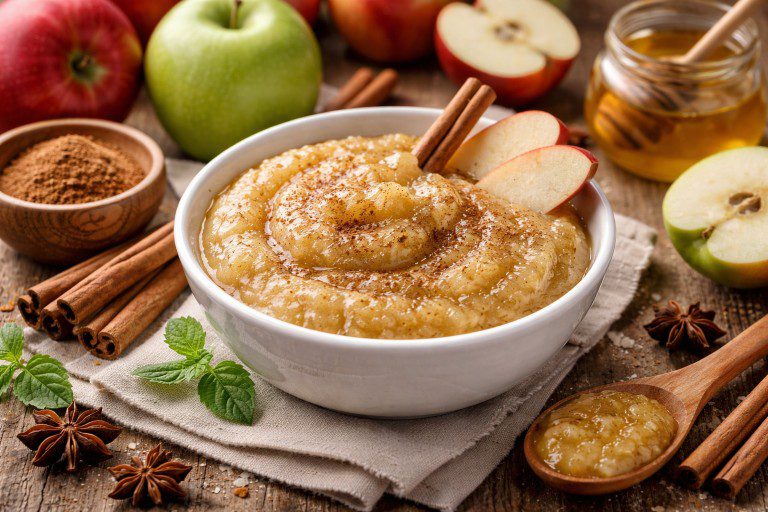
I started making applesauce at home when I was looking for a natural, no-sugar-added option to use in baking. The store-bought versions always felt too sweet and artificial, and I wanted something that actually tasted like apples. The first time I simmered a batch on the stove with just a pinch of cinnamon, the smell that filled the kitchen was incredible — warm, sweet, and completely natural. It was so easy that I felt silly for not trying it sooner. Now I always keep a jar in the fridge, and it ends up in everything from morning oats to weekend pancakes.
Applesauce may look simple, but this humble dish has been cherished across cultures for centuries. Its origins trace back to medieval Europe, where apples were abundant and preserving them through the long winter months was essential. Cooks would simmer apples down into soft, flavourful sauces, often adding spices like cinnamon and cloves that were becoming available through expanding trade routes.
Applesauce later became a household staple in colonial America, where apples grew easily and stored well without refrigeration. Families relied on them year-round, and applesauce was frequently served alongside roasted meats, especially pork, where its natural sweetness balanced the savoury flavours beautifully. That tradition carried forward, and today applesauce has found a new life as a versatile ingredient in baking, breakfast, and healthy snacking.
The Evolution & Global Popularity of Applesauce
Over time, applesauce evolved beyond a preservation method. Today, it is widely enjoyed in countries such as the United States, Germany, and the Netherlands. Not only is it served as a side dish, but it is also used in baking, baby food, and even modern health-conscious cooking.
In recent years, unsweetened applesauce has gained popularity as a natural sweetener and a healthier substitute for oil or butter in recipes. Therefore, it is now considered both nutritious and versatile.
Ultimately, applesauce has transformed from a survival staple into a timeless favorite—valued for its flavor, convenience, and adaptability.
Homemade Applesauce Recipe
Preparation Time: 10 minutes
Cooking Time: 25 minutes
Total Time: 35 minutes
Servings: 4
Calories per Serving: ~50 kcal
Ingredients
- 4 large apples (Fuji, Gala, Honeycrisp, or a mix)
- ½ cup water
- ¼ teaspoon ground cinnamon (optional)
- 1 teaspoon lemon juice
Step-by-Step Guide
1. Prepare the Apples
First, wash, peel, and core the apples. Then, chop them into small chunks. Smaller pieces cook faster and more evenly.
2. Cook the Apples
Next, add the chopped apples and water to a medium saucepan. Cover and cook on medium heat for 15–20 minutes, stirring occasionally to prevent sticking. Eventually, the apples will become soft and tender.
3. Mash or Blend
Once the apples are soft, mash them with a potato masher if you prefer a chunky texture. Alternatively, use a blender or immersion blender for a smooth consistency.
4. Add Flavor (Optional)
After blending, stir in cinnamon and lemon juice. While cinnamon adds warmth, lemon juice enhances freshness and prevents browning.
5. Cool and Serve
Finally, allow the applesauce to cool before serving. It can be enjoyed warm or chilled, depending on preference.
Serving Ideas
Applesauce is incredibly versatile. For example:
- Serve it warm or cold with grilled meats or roasted vegetables.
- Spoon it over pancakes, waffles, or oatmeal.
- Mix it into yogurt for a healthy snack.
- Use it as a dip with breadsticks or crackers.
In addition, it pairs wonderfully with pork dishes as a light, tangy condiment.
Nutritional Information (Per Serving)
Calories: 50
Carbohydrates: 13g
Fiber: 2g
Sugar: 9g (naturally occurring)
Protein: 0g
Fat: 0g
Because it contains no added sugar or fat, unsweetened applesauce is a naturally wholesome option.
Frequently Asked Questions
1. How do I store applesauce?
Store it in an airtight container in the refrigerator for up to 7 days.
2. Can applesauce be frozen?
Yes. Freeze it in airtight containers or ice cube trays for up to 3 months. Then, thaw overnight in the refrigerator.
3. Which apples are best for applesauce?
Sweet apples such as Fuji, Gala, or Honeycrisp work beautifully. However, for a slightly tangy flavor, mix sweet apples with Granny Smith.
4. Can applesauce be stored long-term?
Yes, it can be preserved using proper jar sterilization and water-bath canning methods.
5. Can I add sweeteners or spices?
Although this recipe is unsweetened, you may add honey, maple syrup, or sugar if desired. Additionally, spices like nutmeg, cloves, or allspice can deepen the flavor.
Creative Ways to Use Applesauce in Recipes
Because applesauce is so adaptable, you can incorporate it in various dishes:
- Baking: Replace oil or butter in cakes, muffins, and brownies for a lighter alternative.
- Marinades & Sauces: Use it as a base for barbecue sauces or glazes.
- Smoothies: Add it for natural sweetness and body.
- Desserts: Use as a filling for pastries, crepes, or tarts.
- Condiment: Pair it with roasted meats for balance and freshness.
Final Thoughts
In conclusion, applesauce proves that simple ingredients can create something truly timeless. While it originated as a preservation method, it has evolved into a globally loved staple. Whether you enjoy it plain, spice-infused, or incorporated into recipes, homemade applesauce remains a naturally sweet and healthy treat.
Try this easy recipe today and discover how one simple fruit can transform into something wonderfully versatile.
Share your creations with us on Instagram @thefood.travellers