

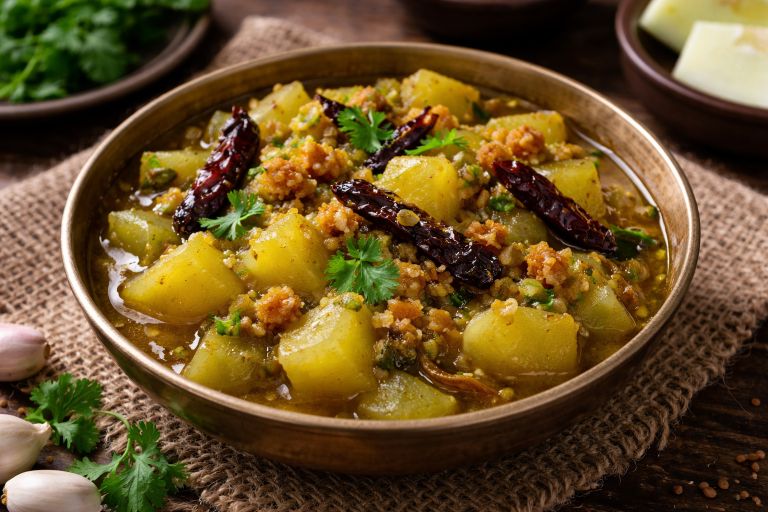
Papaya Khar: A Timeless Delicacy
Papaya khar is one of those dishes I had never heard of until I started researching lesser-known recipes from Northeast India. The concept of using an alkaline extract from banana peel ash in cooking fascinated me — it is such a unique technique that you will not find in any other Indian cuisine.
I reached out to an Assamese colleague who walked me through the process over a phone call, and her first instruction was very clear: the khar liquid has to be prepared carefully, and the quantity matters because too much makes the dish bitter. My first attempt was exactly that — too much khar and not enough seasoning.
The second time, I got the balance right, and the mild, earthy flavour of the raw papaya with that subtle alkaline note was unlike anything I had tasted before. This recipe is a tribute to Assamese cooking and one I am genuinely proud to share.
Papaya khar is a distinctive speciality from Assam that showcases one of the most unique culinary techniques in Indian cooking. Khar is an alkaline extract traditionally prepared from the ash of dried banana peels, and it forms the foundation of an entire category of Assamese dishes. The alkalinity gives the food a subtle, earthy character that is completely unlike any other flavour in Indian cuisine.
Raw papaya grows abundantly across Assam, making it a natural pairing with khar. The dish is simple, nutritious, and deeply rooted in the Assamese philosophy of cooking with fresh, seasonal, minimally processed ingredients. It is typically served with steamed rice and often prepared during festivals and special occasions. For many Assamese families, papaya khar is comfort food that connects them to their land, their produce, and their culinary heritage.
The Role of Alkalinity in Assamese Cuisine
Assamese cuisine is unique in that it retains the six tastes of ancient Hindu gastronomy, such as sweetness, sourness, bitterness, saltiness, spiciness, and astringency. Alkalinity, introduced through khar, differentiates it from other regional cuisines in India. According to Colleen Taylor Sen, a celebrated culinary historian, khar-making is an important ritual, which is deeply rooted in the culture of Assam, and every matriarch approaches it with diligence.
Khar: Origins and Preparation
What is Khar?
Khar is a liquid substance, dark brown in colour. It has an intense astringent aroma and is made out of the ash of the peel of ripe bhim kol, Musa balbisiana or parts of the papaya tree. Making khar is rather simple yet very meaningful. Usually, this is done in the Kartik and Ahin months.
Ingredients needed to make Papaya Khar:
- Ripe bhim kol peels or Papaya tree parts (stem and bark)
- Pure water
- Sun-dry the peels:
- Cut the peels or papaya parts into small pieces and sundry them for 10-15 days.
- Burn the Dried Peels:
- Once dried, burn the pieces to create ash.
- Extract Khar:
- Filter pure water through the ashes and let it sit overnight. The result is a dark, astringent liquid known as khar.
Recipe for Papaya Khar
For Papaya Khar:
- 1 cup of papaya khar (prepared as above)
- 2 cups of diced ripe papaya
- 1 medium onion, finely chopped
- 2 green chillies, slit
- 1 teaspoon mustard oil
- Fresh coriander leaves for garnish
- Salt according to taste (if required)
Preparation Time:
- Preparation: 15 minutes
- Cooking: 10 minutes
- Total Time: 25 minutes
- Nutritional Value (per serving):
- Calories: About 80 kcal
- Proteins: 2 g
- Fats: 3 g
- Carbohydrates: 15 g
- Fibre: 3 g
- Vitamins: Rich in Vitamin C and A
Directions to Cook Papaya Khar:
- Heat Mustard Oil: Take a pan and heat the mustard oil until it becomes red-hot and does not smoke.
- Sauté Onions and Chillies: Put the chopped onions and slit green chillies into the oil. Sauté until the onions turn translucent.
- Add Papaya: Mix in the diced papaya and cook for 2-3 minutes, allowing it to soften a little.
- Incorporate Khar: Add the prepared khar and mix well. Cook for another 5 minutes, letting the flavours intermingle.
- Taste and Season: Try the dish and add a small pinch of salt if needed, based on your discretion.
- Garnish: Now, switch off the stove and finish with garnishes of fresh coriander before serving.
Conclusion
Papaya khar is not a dish; it symbolises Assamese culture and culinary heritage. Its flavour from khar makes it one of the masterpieces of natural ingenuity for nutrient-rich, full-of-flavour meals. Now, khar, from its common use as a household ingredient to becoming a showstopper on Assamese restaurant menus, continues to celebrate its legacy as it brings Assam's flavour to more and more people.
Share your thoughts on our Instagram channel @thefood.travellers
Comments are closed.