
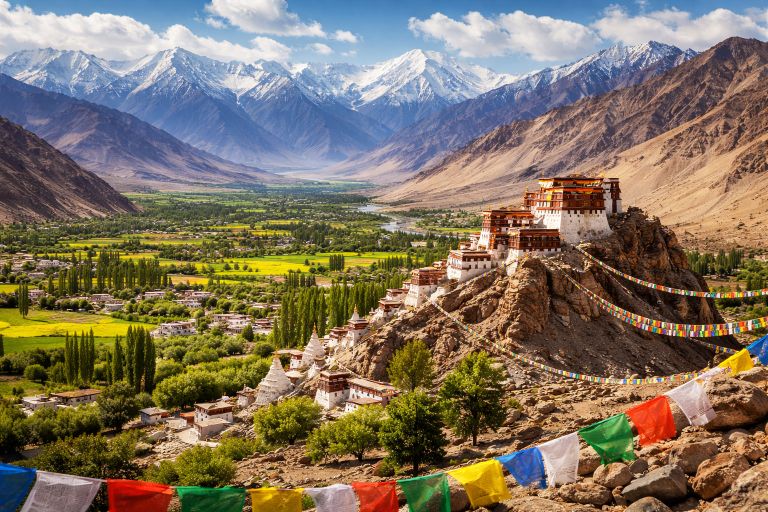
Majestic landscapes, serene Himalayan beauty
Ladakh has been on our travel list for years, and when we finally made the trip, it exceeded every expectation. The drive from Manali to Leh alone was one of the most extraordinary experiences of my life — the landscape changes so dramatically every few hours that it feels like driving through different planets.
I remember stepping out of the car at Khardung La pass and feeling the thin air hit my lungs for the first time. Everything about Ladakh feels different — the stark desert mountains, the impossibly blue lakes, the quiet monasteries perched on cliffsides, and the warmth of the local people despite the harsh climate. We ate simple meals of thukpa and momos at small roadside places along the way, and the food tasted incredible — partly because of the cold, partly because of the setting, and partly because the ingredients were so fresh and honest.
Ladakh is a region in the northernmost part of India, nestled high in the Himalayas. It is a land of extremes — vast high-altitude deserts, majestic snow-capped mountains, and serene turquoise lakes that feel almost unreal when you see them in person. Much of Ladakh sits at an average altitude of over 3,000 metres above sea level, and the landscapes are unlike anything else you will find in India.
The mighty Indus River flows through the region, shaping the terrain and supporting the communities that have called this harsh but beautiful land home for centuries. Ladakh's location on the ancient Silk Route, connecting Central Asia and South Asia, has given it a rich cultural heritage that blends Tibetan, Central Asian, and Indian influences into something unique.
This guide covers everything you need to know if you are planning a trip — from the routes and passes to the culture, food, and experiences that make Ladakh unforgettable.
Local Ingredients and Origins:
The cuisine of Ladakh is based on local ingredients because of the extremely harsh climate, where there are long frigid winters and brief planting seasons. The staple barley bread and vegetables form a filling stew called "Skyu," the most common food in Ladakh. Yak meat and milk products are traditional ways in which the native food has adapted to a local high-altitude environment.
Apricots and sea buckthorn berries flourish in the region and can be found as a staple ingredient for both savoury and sweet dishes. The food in Ladakh pays homage to the resilience of its locals, who have truly mastered the art of minimising what the harsh land has blessed them with.
Buddhist Influences:
The culture of Ladakh reflects the region's significant Buddhist influence. Monasteries are not only centres of spiritual life but also custodians of culinary intelligence. Monks and nuns often emphasise balance, simplicity, and respect for nature when preparing traditional foods. Buddhism has impacted a lot of food, including one very famous one, the noodle soup called "Thukpa"which has Indian and Tibetan flavours. People consume Thukpa during festivals as a symbol of social placidity, which reflects the relationship between regions.
Nomadic Lifestyle and Tea Culture:
The Changpas are one of the few nomadic peoples. A rarity not just in Ladakh, truth be told—and their culinary outlook betrays this half-migrant, half-sedentary life. Butter tea (Gur Gur Chai/Po Cha) plays a substantial role in their everyday life. Not only does this unique warm drink, made with tea leaves, yak butter, and salt, provide heat in the freezing cold climate, but it also symbolises hospitable gatherings when people socialise.
Cultural Values:
A collection of recipes is not just a book on Ladakhi food but an embodiment of the ethos and cultural values of the people. Sharing a meal is part of the social process, which comes from living together in peace and collaboration. Food is essential in building and maintaining social ties—as such, a buffet of regional specialities is central to many traditional reunions, festivals, and festivities.
Ladakhi food is entirely based on respecting nature. Local, organic produce and sustainable cooking techniques are hallmarks of a culinary culture.
The food and culture of Ladakh go hand in hand. It makes an amazing tapestry reflecting the history, geography, and soul of this region. Ladakh has a culture that is unique and forms the main reason that these people live with beauty, heritage, and timelessness, learned from their culinary art of preservation through hard work as a community, along with an integral connection to nature.
Festivals in Ladakh:
Hemis Festival: The most colourful festivals of Ladakh include the Hemis Festival, which is a celebration of the founding father of Tibetan Buddhism, Guru Padmasambhava. The Hemis monastic house, located about 45 kms southeast of Leh, becomes the hub of the festivals. The Cham dances, masked dances, represent the monks. They perform to the beats of indigenous instruments. The show will be a visual treat with bright colours and detailed masks.
Losar (Ladakhi New Year): Losar is celebrated as the Ladakhi New Year, and there is great gusto, with special meals in families, colourful flag decorations at monasteries, flag-raising ceremonies atop roofs and many rituals to ward off evil. Losar, thus, is a time for purification and renewal, marking the victory of good over evil.
Sindhu Darshan Festival: This festival takes the sacred Indus River seriously. Yearly events will bring the people of all communities together near the sacred river of the Indus. They pray and perform all kinds of cultural shows and entertainments. The festival fosters communal harmony and homogeneity within the various communities residing in Ladakh.
Tribal Communities in Ladakh:
There are numerous tribal communities in Ladakh, and they possess different identities and rich cultural differences in traditions and lifestyle. Major Tribal Communities in Ladakh. Major tribal communities of Ladakh include:
Brokpas: Spent in the Dha and Hanu villages along the Indus River, Brokpas are famous for their unique customs and distinguished features. They celebrate the famous Brokpa Festival, traditional dances, music, and great costumes.
Changpas: Nomads and Herders of the Changthang region, Chandpas are also known to be semi-nomadic and are great sheep breeders and rearers of the world-famous Pashmina goats. They graze along with their herds in the vast landscapes of Ladakh.
Here are the 5 most popular foods in Ladakh:
Thukpa: Thukpa is a noodle soup which originated in Tibet, but it has become quite popular in Ladakh today. It contains mostly wheat noodles, vegetables, and meat, usually mutton or chicken. The flavour of the soup comes from a mixture of spices. So it is pretty suitable for the cold climate.
Momos: Momos are steamed dumplings filled with meat, which can be either mutton or chicken, or vegetables, served with a tangy dipping sauce. Momos have particularly become very popular across India, but the Ladakh version carries its own twist, reflecting the local flavours.
Chhutagi: This is a noodle soup popular in Ladakh prepared from flat noodles and vegetables made during special occasions. The dish gets its unique flavour due to indigenous spices.
Butter Tea (Po Cha): Sometimes locally called Po Cha, butter tea is one of the traditional beverages of Ladakh made by churning tea with salt and yak butter. This gives the tea warmth and energy, thus being conducive to the Ladakh climate. It is also an expression of Ladakhi hospitality, served to guests.
Apricots and Apricot Jam: Apricots are the boon of Ladakh, which is used in good quality dried apricots and apricot jam. It provides a sweet and sour flavour to the dishes.
Conclusion:
In conclusion, Ladakh is not simply a geographical entity but rather a testimony to its people's strength. A repository of ancient wisdom and a living canvas of beautifully mingled nature and culture.
The warm hospitality of the Ladakhi people all comes together to make Ladakh a truly enchanting destination. It leaves an indelible mark on the hearts of people who are fortunate enough to witness its wonder.
Best Time: April to July
Share your experience in Ladakh with us! Comment below or tag us @thefood.travellers on Instagram and hashtag it #ladakh
Dive into The Food Travellers' blogs and explore how culture shapes cuisines from around the world!
Comments are closed.