
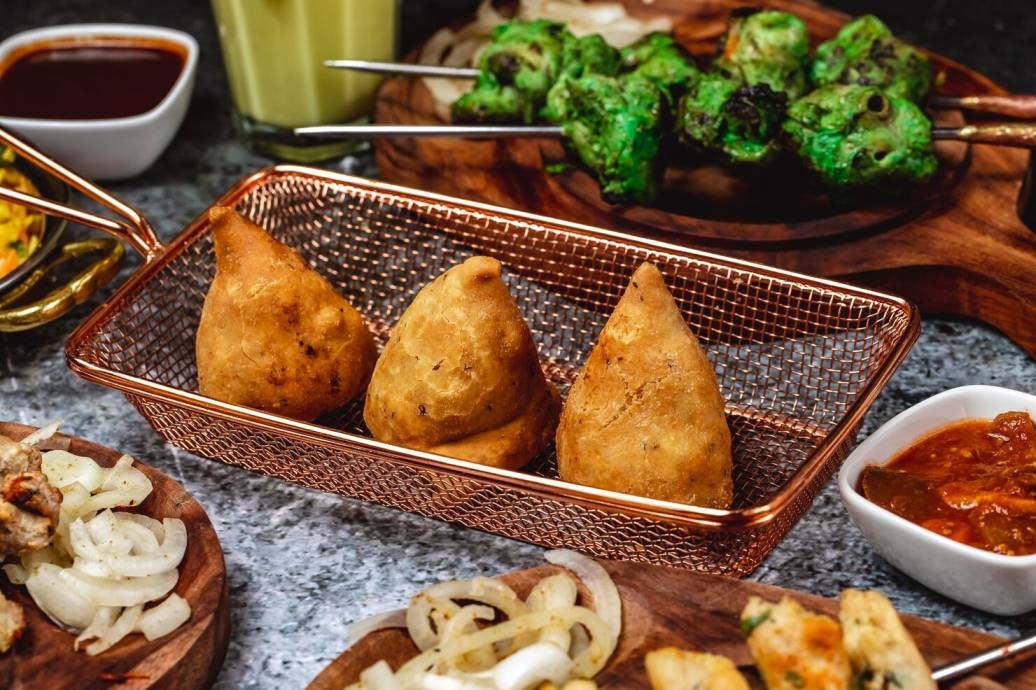
A Golden Bite of Mumbai’s Street Food Culture
In India there are a lot of varieties of samosa. My personal favourite is the one from Mumbai. Growing up in Mumbai, samosas were not something you made at home, they were something you bought from the corner bhel wala for five rupees. When I moved to Bangalore, I realized I missed that exact Mumbai style, which is slightly different from the Punjabi samosa you get at most places. I spent a few weekends trying to recreate it and this recipe is my closest match to what I remember from Mumbai monsoons.
When you think of Mumbai Street food, samosas immediately come to mind. These golden, crispy triangles are more than just a snack. In fact, they reflect the rich culinary culture of India’s financial capital.
Unlike other regional variations, Mumbai-style samosas are slightly larger and generously filled with a spicy potato mixture. Moreover, they are known for their crunchy outer shell and fragrant, tangy interior. Whether served with spicy chutneys or paired with a hot cup of chai, they remain a timeless favorite.
Above all, these samosas bring together crunch, warmth, and bold spice. As a result, they are enjoyed during festivals, celebrations, and everyday tea-time gatherings.
Origin and Global Popularity
Interestingly, the samosa did not originate in India. Instead, it traces its roots to the Middle East, where it was called “Sambosa” and often filled with meat.
However, during the 13th and 14th centuries, traders and travelers introduced it to India. Gradually, the filling evolved to suit local preferences. In many regions, it became a vegetarian delight.
Meanwhile, Mumbai’s vibrant street food culture added its own twist. Vendors enhanced the stuffing with coriander, peanuts, and sometimes even raw mango. Consequently, the Mumbai-style samosa developed its signature tangy and aromatic profile.
Over time, samosas gained international recognition. Today, they are served in cafes, restaurants, and homes worldwide. Without a doubt, they have become synonymous with Indian cuisine.
Preparation Time
Prep Time: 30 minutes
Cook Time: 45 minutes
Total Time: 1 hour 15 minutes
Ingredients
For the Dough
- 2 cups all-purpose flour (maida)
- ½ tsp carom seeds (ajwain)
- Salt to taste
- 2 tbsp ghee or oil
- Water as needed
How to make the Samosa Filling
- 4 medium potatoes (boiled and mashed)
- ½ cup green peas (boiled)
- 2 green chilies (finely chopped)
- 1-inch ginger (grated)
- 2 tbsp coriander leaves (chopped)
- 1 tsp cumin seeds
- ½ tsp turmeric powder
- 1 tsp red chili powder
- ½ tsp amchur powder
- ½ tsp garam masala
- 2 tbsp oil
- Salt to taste
For Frying
-
Oil for deep frying
Step-by-Step Guide
1: Prepare the Dough
First, combine flour, carom seeds, and salt in a bowl. Then add ghee or oil and mix until crumbly.
Next, slowly add water and knead into a firm dough. Cover with a damp cloth and let it rest for 20 minutes.
2: Prepare the Filling
Meanwhile, heat oil in a pan. Add cumin seeds and let them splutter.
Then add grated ginger and green chilies. Sauté briefly.
After that, mix in peas and mashed potatoes. Add turmeric, red chili powder, amchur, garam masala, and salt. Stir well.
Finally, switch off the heat and add fresh coriander leaves. Allow the filling to cool completely.
3: Shape the Samosas
Now divide the dough into small balls. Roll each into an oval sheet.
Next, cut each sheet into two halves. Fold one half into a cone and seal the edge with water.
Then fill the cone with the prepared potato mixture. Seal the top edge tightly to form a triangle.
Repeat the process with the remaining dough and filling.
4: Fry the Samosas
Heat oil in a deep pan over medium heat.
Carefully slide the samosas into the oil. Fry in batches to avoid overcrowding.
Importantly, fry on medium heat so they cook evenly. Continue frying until golden brown and crisp.
Finally, remove and drain on paper towels.
Nutritional Value (Per Samosa)
Calories: 190 kcal
Protein: 4 g
Carbohydrates: 22 g
Fat: 9 g
Fiber: 3 g
Serving Suggestions
Serve Mumbai-style samosas hot with tamarind chutney or mint chutney. Alternatively, ketchup works well too.
For a complete experience, pair them with masala chai. If you want something heartier, serve them alongside chole (chickpea curry).
Cooking Tips
- Ensure the dough is firm. A soft dough may result in soggy samosas.
- Always fry on medium heat. High heat browns them quickly but leaves the inside undercooked.
- For variation, add crushed peanuts or raisins to the filling.
Final Thoughts
Mumbai-style samosas are more than just fried snacks. Rather, they represent a celebration of flavor, texture, and shared joy.
Whether you enjoy them on a rainy evening or serve them at festive gatherings, they never fail to impress. So go ahead, try this recipe, and bring the magic of Mumbai’s street food into your kitchen.