

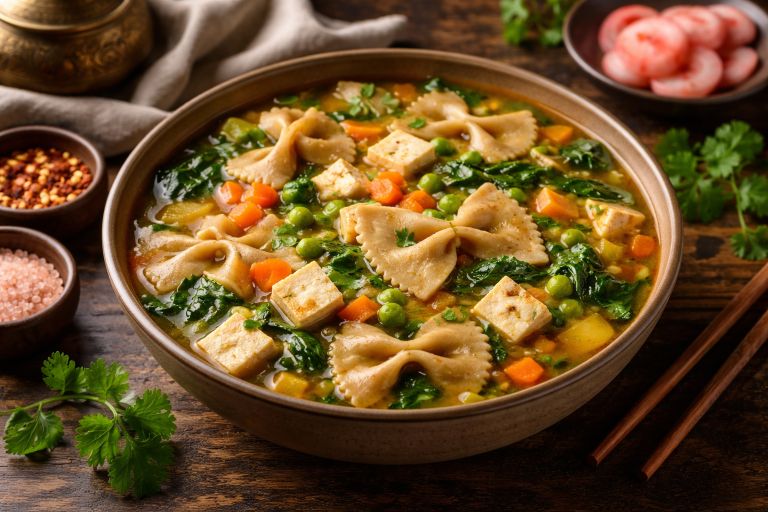
Vegetarian Chhutagi Recipe – Traditional Ladakhi Bow-Tie Pasta Stew
The Vegetarian Chhutagi Recipe is a comforting Himalayan dish that beautifully represents the culinary traditions of Ladakh. Moreover, this rustic stew combines handmade wheat pasta with hearty vegetables in a warming broth. As a result, every bowl delivers nourishment, warmth, and deep satisfaction.
Because Ladakh experiences extremely cold winters, traditional meals must provide energy and comfort. Therefore, dishes like the Chhutagi rely on simple yet nourishing ingredients such as wheat flour, root vegetables, and rich broths.
Additionally, the distinctive bow-tie shaped pasta pieces absorb the flavorful stew beautifully. Consequently, this Vegetarian Chhutagi Recipe becomes both filling and comforting, especially during cold weather.
If you enjoy regional Indian dishes, you may also explore:
You can also enjoy Asian and Tibetan recipes:
- 15 Café-Style Veg & Vegan Variations
- History of Momos
- Veg Hot & Sour Soup
- Korean Corn Dogs
- Korean Cream Cheese Garlic Bread
Table of Contents
- History of the Vegetarian Chhutagi Recipe
- What Makes Chhutagi Unique
- Ingredients for Vegetarian Chhutagi Recipe
- How to Make Vegetarian Chhutagi Recipe
- Nutritional Benefits
- Tips for Perfect Chhutagi
- Serving Suggestions
- Frequently Asked Questions
History of the Vegetarian Chhutagi Recipe
The Vegetarian Chhutagi Recipe originates in Ladakh, a high-altitude region in the Indian Himalayas. Because the climate remains extremely cold for most of the year, Ladakhi cuisine focuses on warm, nourishing meals.
Tibetan and Central Asian Influence on Vegetarian Chhutagi Recipe
Historically, Ladakhi food reflects strong influences from Tibetan and Central Asian cooking traditions.
Read more about Ladakh on our blog
Simple Mountain Ingredients for Vegetarian Chhutagi Recipe
Staples such as wheat, barley, root vegetables, and broths form the base of many Ladakhi dishes.
Family Cooking Traditions
Families traditionally prepare chhutagi together by kneading dough and shaping the pasta.
A Dish for Harsh Winters
Consequently, the Vegetarian Chhutagi Recipe became a comforting winter meal that warms both body and soul.
What Makes Chhutagi Unique
The Vegetarian Chhutagi Recipe stands out because of its handmade bow-tie pasta pieces.
Handmade Wheat Pasta
Unlike Italian pasta, Ladakhi chhutagi uses simple whole wheat dough shaped by hand.
Hearty Vegetable Stew
Vegetables like potatoes, carrots, and spinach create a rich broth.
Cultural Comfort Food
Because the Chhutagi Recipe comes from Himalayan traditions, it carries strong cultural significance.
Read about the article about food culture reference
Ingredients for Vegetarian Chhutagi Recipe
Chhutagi Pasta Dough
- 1 cup whole wheat flour
- ¼ tsp salt
- Water as required
Vegetable Stew
- 1 tbsp oil
- 1 onion (chopped)
- 3 garlic cloves (minced)
- 1 tomato (chopped)
- 1 carrot (diced)
- 1 potato (diced)
- ½ cup green peas
- 1 cup spinach or cabbage
- 150 g tofu (cubed)
- ½ tsp black pepper
- ½ tsp cumin powder (optional)
- Salt to taste
- 4 cups vegetable stock
How to Make Vegetarian Chhutagi Recipe
1 – Prepare the Dough
First, combine wheat flour and salt in a bowl. Then gradually add water and knead into a firm dough.
Rest the Dough
Allow the dough to rest for about 10 minutes.
H5: Why Resting Matters
Resting relaxes the gluten and makes the dough easier to roll.
H6: Roll Thin Dough
Thin dough ensures the Chhutagi cooks evenly.
2 – Shape the Chhutagi
Roll the dough thin and cut into small squares.
Pinch the center of each square to create the classic bow-tie shape.
Consequently, these shapes hold the broth perfectly.
3 – Prepare the Stew Base
Heat oil in a deep pot.
Add onions and garlic, then sauté until aromatic.
Add chopped tomatoes and cook until soft.
4 – Add Vegetables
Add carrots, potatoes, and peas.
Stir gently and cook for 2–3 minutes.
5 – Add Broth and Seasoning
Pour vegetable stock into the pot.
Season with salt, pepper, and cumin powder.
Bring the mixture to a gentle simmer.
6 – Add Tofu
Add tofu cubes and cook for 3–4 minutes.
Tofu adds protein to the Chhutagi Recipe.
7 – Cook the Chhutagi Pasta
Drop the handmade pasta pieces into the stew.
Cook for 8–10 minutes until soft.
Add spinach or cabbage toward the end.
8 – Serve the Dish
Once the broth thickens slightly, remove the pot from heat.
Serve the Vegetarian Chhutagi hot in deep bowls.
Nutritional Benefits
The Chhutagi offers several health benefits.
Balanced Nutrients
Whole wheat provides fiber while tofu adds plant protein.
Vegetable Nutrition
Carrots, spinach, and potatoes supply vitamins and minerals.
Read Harvard’s article about Healthy Eating Plate
Tips for Perfect Vegetarian Chhutagi Recipe
Roll the Dough Thin
Thin pasta pieces cook evenly in the broth.
Use Vegetable Stock
Stock enhances the flavor of the stew.
Choose Firm Tofu
Firm tofu holds its shape better during cooking.
Maintain Thick Broth
The stew should resemble a hearty soup rather than watery broth.
Serving Suggestions for Vegetarian Chhutagi Recipe:
The Chhutagi tastes best when served hot.
You may serve it with:
- Himalayan butter tea
- Herbal mountain tea
- Pickled vegetables
- Chilli oil drizzle
Fresh herbs such as coriander or spring onions also enhance the dish.
Frequently Asked Questions about Vegetarian Chhutagi Recipe:
What does vegetarian chhutagi taste like?
The Chhutagi Recipe tastes like a mild vegetable stew combined with soft handmade pasta.
Can I use all-purpose flour?
Yes. However, whole wheat flour provides a more traditional flavor.
Can chhutagi be stored?
You can refrigerate it for one day, although it tastes best fresh.
Can I freeze the pasta?
Yes. Freeze shaped chhutagi pieces for up to one month.
Final Thoughts
The Chhutagi Recipe beautifully captures the spirit of Ladakhi cuisine. Although the ingredients remain simple, the dish delivers warmth, nourishment, and comfort.
Moreover, preparing this Chhutagi Recipe allows you to experience Himalayan culinary traditions at home. With its handmade pasta and hearty vegetable broth, every bowl brings the warmth of Ladakh directly to your kitchen.
Follow our food journeys on Instagram: