

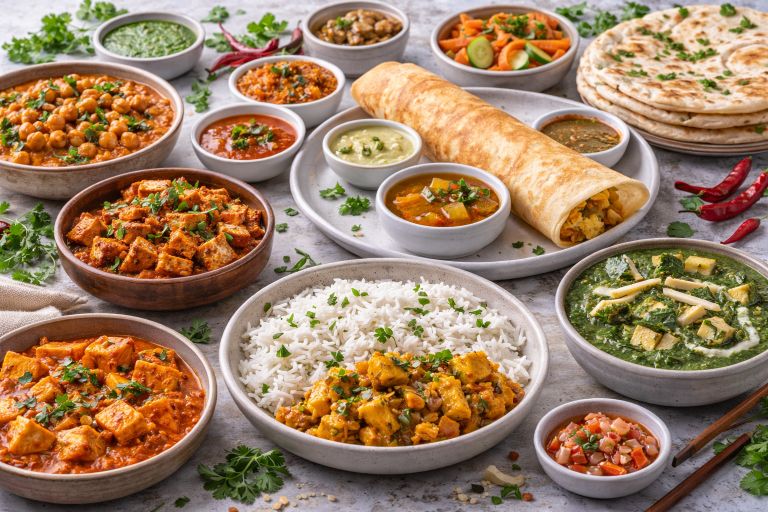
Traditional Indian Regional Recipes — The Complete Guide to India’s Culinary Heritage
Table of Contents
– North Indian Recipes
– South Indian Recipes
– East Indian Recipes
– West Indian Recipes
– Traditional & Lost Recipes
– Indian Street Food Recipes
– Indian Sweets and Desserts
– Frequently Asked Questions
Introduction
India’s culinary map is unlike any other in the world. Each of its 28 states carries a distinct food identity shaped by geography, climate, history, and tradition. This complete guide to Indian regional recipes documents food stories from the snow-capped mountains of Ladakh to the coconut groves of Kerala, from the mustard fields of Bengal to the streets of Mumbai.
Whether you are a seasoned home cook or a curious food explorer, every Indian regional recipe here is vegetarian, thoroughly researched, and rooted in authentic regional tradition.
North Indian Recipes
North Indian cuisine is defined by wheat-based breads, rich dairy, bold spices, and warming dishes suited to cold winters. Moreover, from Punjab’s famous parathas to Ladakh’s rare mountain stews, this region offers extraordinary variety that changes dramatically as you move from the plains to the mountains.
Because the climate in northern India ranges from scorching summers in the plains to freezing winters in the Himalayas, the cuisine adapts accordingly — offering both cooling summer dishes and deeply nourishing winter stews. Therefore, North Indian food is perhaps the most climatically diverse of all Indian regional traditions.
Featured North Indian Recipes
Starting with the Himalayan belt:
Himalayan & Ladakhi:
- 🔗 Vegetarian Chhutagi Recipe — Ladakhi Bow-Tie Pasta Stew
- 🔗 Bamboo Shoot Curry Recipe – Bold Taste of Northeast India
Moving to the Punjabi classics that have become beloved across India:
Punjabi Classics:
- 🔗 Aloo Paratha Recipe — Authentic Punjabi Stuffed Flatbread
- 🔗 Methi Matar Malai — Creamy North Indian Curry
- 🔗 Paneer Butter Masala — Creamy Indian Curry
Additionally, from the kitchens of Delhi and Uttar Pradesh:
Delhi & UP:
- 🔗 Dal Tadka Recipe — Classic Indian Comfort Food
- 🔗 Hara Bhara Kabab — Crispy Indian Vegetarian Appetizer
South Indian Recipes
South Indian cuisine is one of the most ancient culinary traditions in the world. Specifically, it is rooted in Ayurvedic principles, coconut, tamarind, curry leaves, and rice. As a result, the food here is lighter, more acidic, and deeply aromatic compared to its northern counterparts.
Furthermore, South Indian cooking places a strong emphasis on fermentation — from the fermented rice batter used in dosas and idlis to the naturally preserved tamarind and coconut chutneys that accompany almost every meal. Because of this emphasis on fermentation, South Indian food is not only delicious but also highly nutritious.
In addition to its nutritional qualities, South Indian cuisine carries deep spiritual significance. For instance, many of the region’s most iconic dishes originated in temple kitchens as prasadam — sacred food offerings prepared for deities and distributed to devotees.
Featured South Indian Recipes
Beginning with Kerala’s most treasured dishes:
Kerala:
- 🔗 Paal Payasam — Kerala’s Traditional Sacred Rice Pudding
- 🔗 Puttu Kadala Curry — Authentic Kerala Breakfast
- 🔗 Tomato Fry Recipe — Kerala Style
- 🔗 Palada Payasam – Kerala’s traditional milk dessert
Moving further north to Tamil Nadu and Karnataka:
Tamil Nadu:
- 🔗 South Indian Sambar Recipe — Authentic & Flavorful
- 🔗 Pongal Festival – History, Signifance and Traditional Recipes
Karnataka:
Andhra Pradesh & Telangana:
East Indian Recipes
East Indian cuisine spans the refined Bengali tradition, the hearty food of Bihar and Jharkhand, and the unique flavours of the northeastern states. Consequently, it is one of India’s most historically rich and underexplored culinary regions, offering extraordinary depth for anyone willing to look beyond the mainstream.
Historically, Bengal was one of the most culturally and intellectually vibrant regions of India — and its cuisine reflects that sophistication. For example, Bengali cooking uses a five-spice blend called panch phoron that is unique to the region and creates a flavour profile found nowhere else in Indian cooking.
Similarly, Bihar’s food tradition is deeply connected to the land — using sattu (roasted gram flour), mustard oil, and wood-fire cooking techniques that have remained unchanged for centuries. As a result, Bihari cuisine is one of the most authentic and least commercialized food traditions in India.
Featured East Indian Recipes
Starting with Bengal’s most celebrated dishes:
Bengali:
- 🔗 Mishti Doi — Traditional Bengali Sweet Yogurt Dessert
- 🔗 Luchi Aloo Dum Recipe – Bengali Style
- 🔗 Sandesh Recipe – Kolkata’s iconic Bengali dessert
Next, representing Bihar’s extraordinary culinary heritage:
Bihari:
Finally, from the Himalayan eastern belt where Indian and Tibetan food traditions meet:
Himalayan East:
West Indian Recipes
West Indian cuisine covers the vibrant street food culture of Maharashtra, the vegetarian-first tradition of Gujarat, the fiery flavours of Rajasthan, and the coastal richness of Goa. Because of this geographical and cultural diversity, West India arguably has the widest range of flavour profiles of any Indian region.
For instance, Gujarati cuisine is almost entirely vegetarian by tradition and is known for its distinctive sweet-salty-spicy balance — a flavour combination found in no other regional Indian cuisine. In contrast, Maharashtrian food is bolder and spicier, with a strong street food culture centered around Mumbai.
Moreover, Rajasthani cuisine developed in response to the scarcity of water and fresh vegetables in the desert — consequently producing preservation techniques and cooking methods that are uniquely adapted to arid conditions.
Featured West Indian Recipes
Beginning with Maharashtra’s most iconic street food:
Maharashtra:
- 🔗 Mumbai Style Pav Bhaji — Buttery Street Food
- 🔗 Bombay Ice Halwa recipe
- 🔗 Sabudana Khichdi Recipe – vrat special
- 🔗 Mumbai Style Chinese Bhel Recipe
Additionally, representing the sweet traditions of Gujarat and Rajasthan:
Gujarat & Rajasthan:
- 🔗 Kaju Katli — The Timeless Charm of India’s Golden Sweet
- 🔗 Fafda Jalebi with Papaya Sambhario – Crispy Sweetness
Featured Northeast India Recipes
Following are some iconic dishes of the Northeast:
- 🔗 Scallion Paneer Momos — Easy & Delicious Dumplings
- 🔗 Truffle Mushroom Momos
- 🔗 Vegetarian Chhutagi — Ladakhi Bow-Tie Pasta Stew
- 🔗 Bamboo Shoot Curry Recipe – Bold Taste of Northeast India
Traditional & Lost Indian Recipes
These are the rarest and most historically significant recipes in our collection. Specifically, these are dishes that are at risk of being forgotten as modern cooking habits change and younger generations move away from time-consuming preparation methods.
However, documenting and sharing these recipes is one of the most important things a food blog can do. After all, every traditional recipe that disappears takes with it a piece of cultural memory — a connection to the people, places, and practices that shaped a community’s identity.
Therefore, we treat these recipes with particular care — researching their origins, documenting their techniques, and presenting them with the cultural context they deserve.
Featured Traditional Recipes
- 🔗 Vegetarian Chhutagi — Ladakhi Bow-Tie Pasta Stew
- 🔗 Bihari Litti Chokha — Authentic Traditional Guide
- 🔗 Paal Payasam — Kerala’s Sacred Rice Pudding
- 🔗 Mishti Doi — Bengali Sweet Yogurt
- 🔗 Kaju Katli — India’s Golden Cashew Sweet
- 🔗 Fafda Jalebi with Papaya Sambhario – Crispy Sweetness
Indian Street Food Recipes
India’s street food culture is one of the most vibrant in the world. In particular, from Mumbai’s iconic vada pav to Delhi’s elaborate chaat and the momos of the Himalayan foothills, street food tells the story of Indian urban life with extraordinary flavour and energy.
What is more, Indian street food is not just about taste — it is about the experience of eating outdoors, surrounded by the sights, sounds, and smells of a busy market or roadside stall. Because of this cultural richness, street food has become one of the most searched categories in Indian regional cooking.
Additionally, many Indian street food recipes are surprisingly easy to recreate at home — provided that you use the right spice combinations and follow authentic techniques rather than simplified shortcuts.
Featured Street Food Recipes
- 🔗 Vada Pav — Iconic Street Food of Maharashtra
- 🔗 Raj Kachori — The King of Indian Chaat
- 🔗 Scallion Paneer Momos — Creamy Dumplings
- 🔗 Crispy Corn Recipe
- 🔗 Honey Chilli Baby Corn
Indian Sweets and Desserts
Indian mithai is as diverse as Indian cuisine itself. Moreover, every region has its signature sweet — made with local ingredients, traditional techniques, and prepared for specific festivals and occasions that give each sweet its cultural meaning.
For example, while Kaju Katli is associated with Diwali celebrations across India, Mishti Doi is inseparable from Bengali festivals and adda culture. Similarly, Paal Payasam holds sacred significance in Kerala’s temple tradition. Therefore, Indian sweets are never just food — they are cultural markers that signal celebration, devotion, and community.
Furthermore, the techniques used in Indian sweet-making are often highly specialised — consequently requiring patience, precision, and an understanding of how sugar, dairy, and nuts behave at different temperatures.
Featured Indian Sweet Recipes
- 🔗 Kaju Katli — India’s Golden Cashew Sweet
- 🔗 Mishti Doi — Bengali Sweet Yogurt
- 🔗 Paal Payasam — Kerala’s Sacred Rice Pudding
About The Food Travellers
The Food Travellers is a vegetarian food and travel blog dedicated to documenting authentic Indian regional recipes and global cuisine. Specifically, it was founded by Gayatri Iyer, who explores hidden culinary gems, traditional cooking methods, and the food stories that connect communities across India and the world.
Furthermore, our commitment is to accuracy, authenticity, and accessibility — because every recipe deserves to be presented with the cultural context that makes it meaningful, not just a list of ingredients and steps.
As a result, every post on The Food Travellers is thoroughly researched, culturally grounded, and written for home cooks who want to experience the real flavours of India.
Follow our food journeys:
Also explore our other recipe collections:
Frequently Asked Questions
What are the most popular Indian regional recipes?
The most searched Indian regional recipes include Aloo Paratha from Punjab, Paal Payasam from Kerala, Mishti Doi from Bengal, Litti Chokha from Bihar, and Chhutagi from Ladakh. Moreover, each of these recipes represents a distinct regional tradition with its own unique history and cultural significance.
Which Indian region has the best vegetarian food?
Gujarat is widely considered India’s most vegetarian-friendly cuisine — almost entirely plant-based by tradition. In addition, South India, particularly Kerala and Tamil Nadu, also has an extraordinarily rich vegetarian tradition rooted in temple cooking and Ayurvedic principles. However, every region of India has outstanding vegetarian dishes — therefore the best answer depends on which flavour profiles appeal to you most.
What makes Indian regional recipes different from restaurant Indian food?
Restaurant Indian food is often standardized for mass appeal — using generic spice blends and techniques that work across different regional dishes. In contrast, authentic Indian regional recipes use locally specific ingredients, traditional cooking methods, and flavour profiles that are unique to their place of origin. As a result, the difference in taste and authenticity is significant.
Are Indian regional recipes difficult to make at home?
Most traditional Indian regional recipes require only basic equipment and locally available ingredients. In fact, the key is patience and following the technique carefully. For instance, dishes like Aloo Paratha, Mishti Doi, and Paal Payasam are well within reach for any home cook. Furthermore, our step-by-step recipes include all the guidance you need to succeed on your first attempt.
Where can I find more Indian regional recipes?
Browse our complete collection by region using the navigation menu. Specifically, North India, South India, East India, and West India each have their own dedicated section with all our recipes organised by sub-region and dish type. Additionally, our Traditional & Lost Recipes category contains our rarest and most historically significant dishes.