
History of Momos – From Himalayan Dumplings to Global Street Food
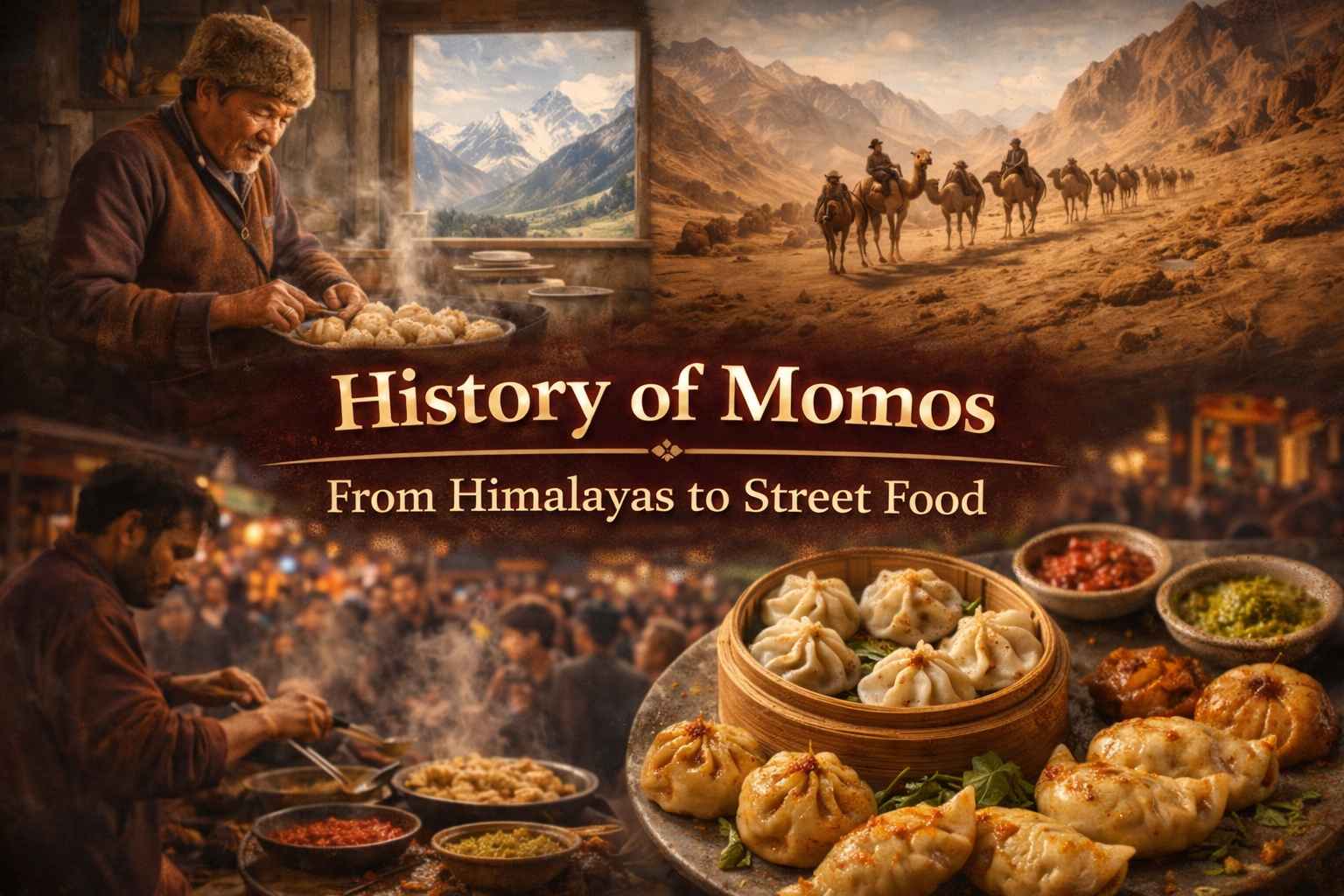
The History of Momos begins high in the Himalayan mountains, where communities created warm and nourishing dumplings to survive long winters. Moreover, these humble dumplings eventually transformed into one of the most loved street foods across South Asia and beyond.
Because the Himalayas experience extremely cold climates, people needed meals that were filling, simple, and efficient to cook. Consequently, dumplings emerged as a practical solution. Over time, the History of Momos expanded far beyond mountain homes and entered bustling street markets and urban food culture.
Today, when you bite into a plate of steaming dumplings with fiery chutney, you are actually experiencing centuries of culinary evolution. Therefore, exploring the History of Momos helps us understand how food travels, adapts, and connects cultures.
If you enjoy regional food traditions, you may also explore:
Mishti Doi Recipe – Traditional Bengali Dessert
Sandesh Recipe – Kolkata’s Iconic Sweet
Papaya Khar Recipe – Assamese Culinary Tradition
Bihari Litti Chokha Recipe
Table of Contents
- Origin and History of Momos
- How Momos Travelled Across the Himalayas
- When Momos Became Street Food
- Different Types of Momos
- Why Momos Became Globally Popular
- FAQ about Momos
Origin and the History of Momos
The History of Momos begins in Tibet and Nepal, where dumplings were created as a survival food for harsh winters.
Himalayan Food Traditions
In high-altitude regions, fresh vegetables were limited and fuel resources were scarce. Therefore, people needed meals that could cook quickly and retain heat.
Influence of Chinese Dumplings
Many historians believe that the History of Momos connects to Chinese dumplings such as jiaozi.
You can read all the details of why it is called dumpling
Adaptation by Himalayan Communities
However, Himalayan cooks modified the dumpling recipe.
For example:
- Dough wrappers became thicker
- Fillings included local meats and vegetables
- Spices were added for warmth
Birth of Momos
Consequently, these adapted dumplings became known as momos, a staple dish in Tibetan and Nepalese households.
How Momos Travelled Across the Himalayas
Although the History of Momos began in mountain villages, migration helped spread the dish across borders.
During the mid-20th century, Tibetan communities migrated to India. As a result, they introduced momos to regions like:
- Darjeeling
- Sikkim
- Arunachal Pradesh
- Delhi
Gradually, local street vendors started selling momos in Indian cities. Consequently, the History of Momos entered a completely new phase.
You can read more about how Tibetan migration happened:
When Momos Became Street Food
The History of Momos changed dramatically when vendors introduced dumplings to street food culture.
Affordable and Quick to Prepare
Because momos are easy to steam in batches, vendors could serve them quickly to customers.
Perfect for Urban Life
College students, office workers, and travelers quickly embraced momos as a convenient snack.
The Role of Spicy Chutney
Additionally, fiery red chili chutney became the signature companion to momos.
Consequently, the History of Momos transformed from traditional household food to modern street-food legend.
Different Types of Momos
The History of Momos also reflects constant culinary innovation. Over time, cooks developed many variations.
By Cooking Style
- Steamed Momos – the classic version
- Fried Momos – crispy and golden
- Pan-Fried (Kothey) Momos – crispy base with steamed top
By Filling
- Vegetable Momos – cabbage, carrot, onion
- Chicken Momos – the most popular street version
- Paneer Momos – rich vegetarian option
Modern Fusion Momos
Today, creative chefs continue experimenting.
Examples include:
- Tandoori Momos
- Butter Chicken Momos
- Cheese Corn Momos
- Chocolate Momos
Although purists prefer the classic version, innovation keeps the History of Momos evolving.
Why Momos Became Globally Popular
Several factors explain why momos became so popular quickly.
Simple Ingredients
Dough, vegetables, and spices create delicious flavors with minimal cost.
Cultural Adaptability
Momos easily adapt to different cuisines and tastes.
Perfect Street Food
Because they are quick to cook and easy to eat, momos fit perfectly into urban food culture.
You can read more about street food:
Consequently, the History of Momos continues to expand as chefs introduce new variations worldwide.
Frequently Asked Questions about the History of Momos
Where did momos originate?
The History of Momos traces back to Tibet and Nepal in the Himalayan region.
Are momos similar to Chinese dumplings?
Yes. Momos evolved from dumplings such as jiaozi, although Himalayan cooks adapted the recipe.
Why are momos popular street food?
Because they are affordable, filling, and easy to cook quickly.
What chutney is served with momos?
Most vendors serve momos with spicy red chili-garlic chutney.
You can enjoy other momos recipes:
Final Thoughts
The history reveals how a simple survival food can become a global culinary icon. Although the dish began in quiet Himalayan kitchens, it now thrives in busy city streets across the world.
Moreover, every variation tells a new chapter in the Momos delicacy. Whether you enjoy them steamed, fried, or drenched in spicy chutney, each bite connects you to centuries of food tradition.
Ultimately, momos remind us that the most beloved foods often begin with humble origins.
Follow our culinary journeys on Instagram: