

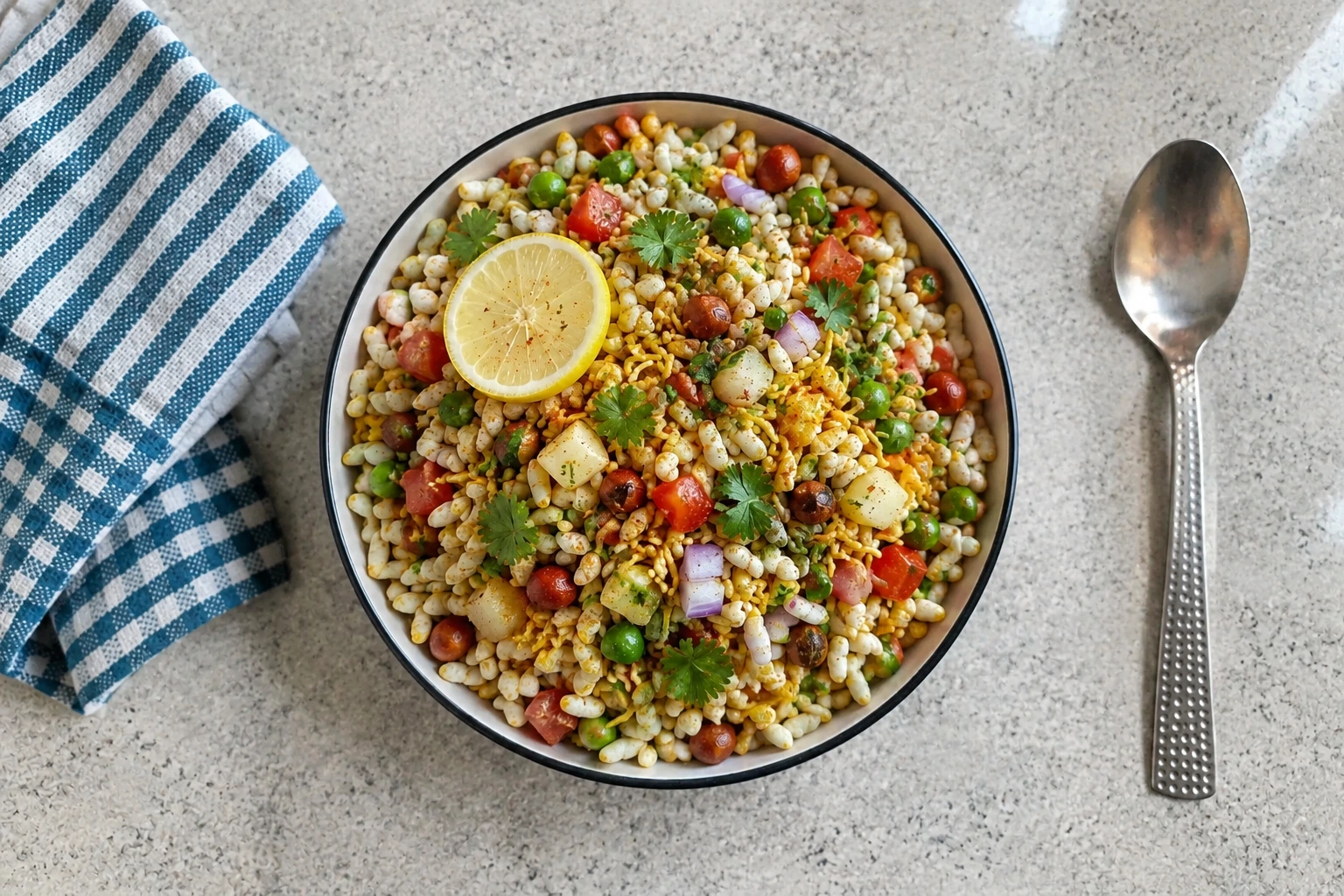
Jhal muri comes from my husband Harish’s native region in eastern India and is one of those treats which remind him of his childhood days. Harish remembers purchasing the cone-shaped bags of this snack from vendors roaming the streets in the evenings and how his eyes light up when he talks about the mustard oil and its crunchy bite, suggesting to me that this treat is not only something he likes but also holds sentimental value. Making this jhal muri became a challenge because I had to master the right combination of spices. The first time I tried it, it was too spicy because of the green chilli, and my husband and I found ourselves reaching for water. But this recipe is the one which got his approval.
Jhal muri is one of the most famous street snacks in India — light, crispy, sour and full of strong flavours. Jhal muri is popped rice, fresh veggies, spices and mustard oil, and its combination of simplicity and strong flavours is just perfect. One of the biggest advantages of this dish is that it takes only about fifteen minutes to make.
It will surprise many people by the way heat is building up in it. First bites will seem light and crispy, but gradually, you'll notice how spices get to work. This gradual rise in spiciness level is one of the main secrets of this snack.
The Story of Jhal Muri
The history of jhal muri dates back to the bustling city life of Kolkata and West Bengal, where food vendors make the mixture in a big tin container and serve it to people in paper cones. Jhal means spiciness, while muri is puffed rice.
In India, puffed rice has been consumed by people for years; however, the modern form of the snack jhal muri came into fashion in the late 19th and early 20th centuries in colonial Kolkata, when it was available at an affordable price, easy to cook and ideal to meet the needs of busy life. Food vendors used to sell it right next to the train station, parks and busy crossings of Kolkata. It cannot be imagined separately from the hustle of the city.
For us, the snack jhal muri bears a lot of emotional meaning since it reminds us of our childhood memories, family strolls, train trips in Bengal and the shared pleasure of having this yummy treat with beloved ones.
Cultural Significance
Jhal Muri has become a part of Eastern India’s rich cultural heritage. In Kolkata and the surrounding areas, it is a ubiquitous street snack, often relished on trains or after a leisurely evening walk. This dish is a quintessential example of Indian street food; the basic ingredients are enhanced with spices to create something far more than meets the eye. To the Bengalis who have migrated from their native homes, Jhal Muri remains an essential reminder of home.
Nutritional Value (Approximate per serving)
Jhal Muri is less calorific and less fatty than fried street food, and thus, if you are on a diet and crave some tasty snacks without any guilt, Jhal Muri is your best bet.
On average, there are about 180-220 calories, 30- 35 g carbohydrates, 5- 7 g protein, 5- 8 g fat, and 3- 4 g fibre in one portion. If made with a small amount of oil, Jhal Muri becomes a relatively healthy snack among other street food options.
Preparation Time - 15 minutes
The preparation time for this dish is around 15 minutes, which includes 10 minutes of preparation and 5 minutes for roasting the spices and assembling all the ingredients.
Also try our other Bengali recipes.
Ingredients
2 cups puffed rice (muri)
1 tablespoon of boiled black chana
1 boiled potato, chopped into fine pieces
1 onion, finely chopped
1 green chilli, finely chopped (if desired)
1 teaspoon chopped coriander leaves
1 teaspoon bhaja masala
Black salt, a pinch
2 teaspoons roasted peanuts
2 teaspoons chanachur
Mustard oil, a few drops (if desired)
Lemon juice, as needed
Thick coconut slices for garnishing
Sev (optional)
Bhaja Masala (Spice Mix)
- 1 teaspoon cumin seeds
- 1 teaspoon fennel seeds
- 1 teaspoon coriander seeds
- 2 green cardamom pods
Steps for Preparation of Jhal Muri
Take a large mixing bowl.
Then start adding all the prepared ingredients one by one.
- Chopped onion
- Finely chopped boiled potatoes
- Black chana: 1 tablespoon (optional)
- Green chilli
- Roasted peanuts and chanchur mix. This step helps to increase the crunch and pack jhal muri with bold flavours
- Now add 2 cups of puffed rice and give it a good mix
- Next, add black salt, bhaja masala (as per taste) and finely chopped coriander leaves.
- Drizzle a few drops of mustard oil and squeeze some lemon, and give it a good mix. Your dish is ready to serve
Tips and Serving Suggestions
- You can garnish it with thinly sliced dry coconut pieces and some sev.
- Serve it immediately, as muri gets soggy over time
- Consume it immediately for perfect taste. As the moisture content of vegetables and lemon juice increases, the puffed rice becomes soft.
FAQs
Can I make jhal muri without mustard oil? Yes, but then jhal muri won't have its signature Bengali taste. If you prefer, you may skip it or replace it with any other oil. But again, it will not taste the same.
Why does jhal muri get soggy so fast? The vegetables and lemon juice contain moisture that makes puffed rice soggy. Therefore, always serve it fresh.
Can I store jhal muri? No, jhal muri is not meant to be stored. Although you can cut vegetables or prepare spices in advance, assemble them right before consumption.
Is jhal muri a healthy food? Yes, it is a light dish with a low amount of calories and a high amount of fibre, especially if you use a minimal amount of oil. It is healthier than deep-fried street foods.
Is there anything I could customise in jhal muri? Yes, add more raw mango, and include some tomatoes or sprouts in your dish or garnish it with pomegranate seeds.
How to Serve Jhal Muri
Jhal muri can be served in paper cones to enjoy it as an authentic street food — it tastes so different when served in a cone, not on a plate. It pairs perfectly with masala chai to make a delicious evening snack. You can add pieces of raw mango during its season. This snack makes an amazing appetiser when you arrange gatherings — all you need to do is put all the ingredients on a table, and your guests will make it by themselves.
Conclusion
Jhal muri shows that even simple ingredients are enough to make an incredible dish. It was a nostalgic dish for Harish, and now it is one of the recipes that I can proudly say that I mastered myself.