

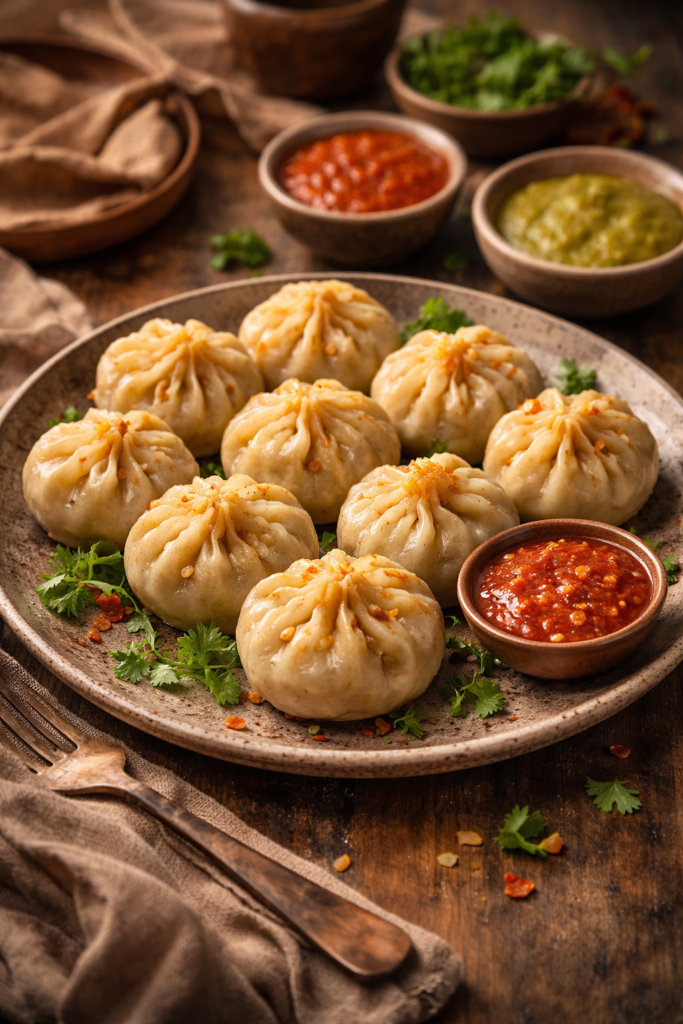
It’s a cold evening. Your fingers hover over a paper plate, steam fogs your glasses, and before you even take a bite, the aroma pulls you in. One dip into fiery red chutney, one soft bite—and suddenly, the world slows down.
That’s the magic of momos.
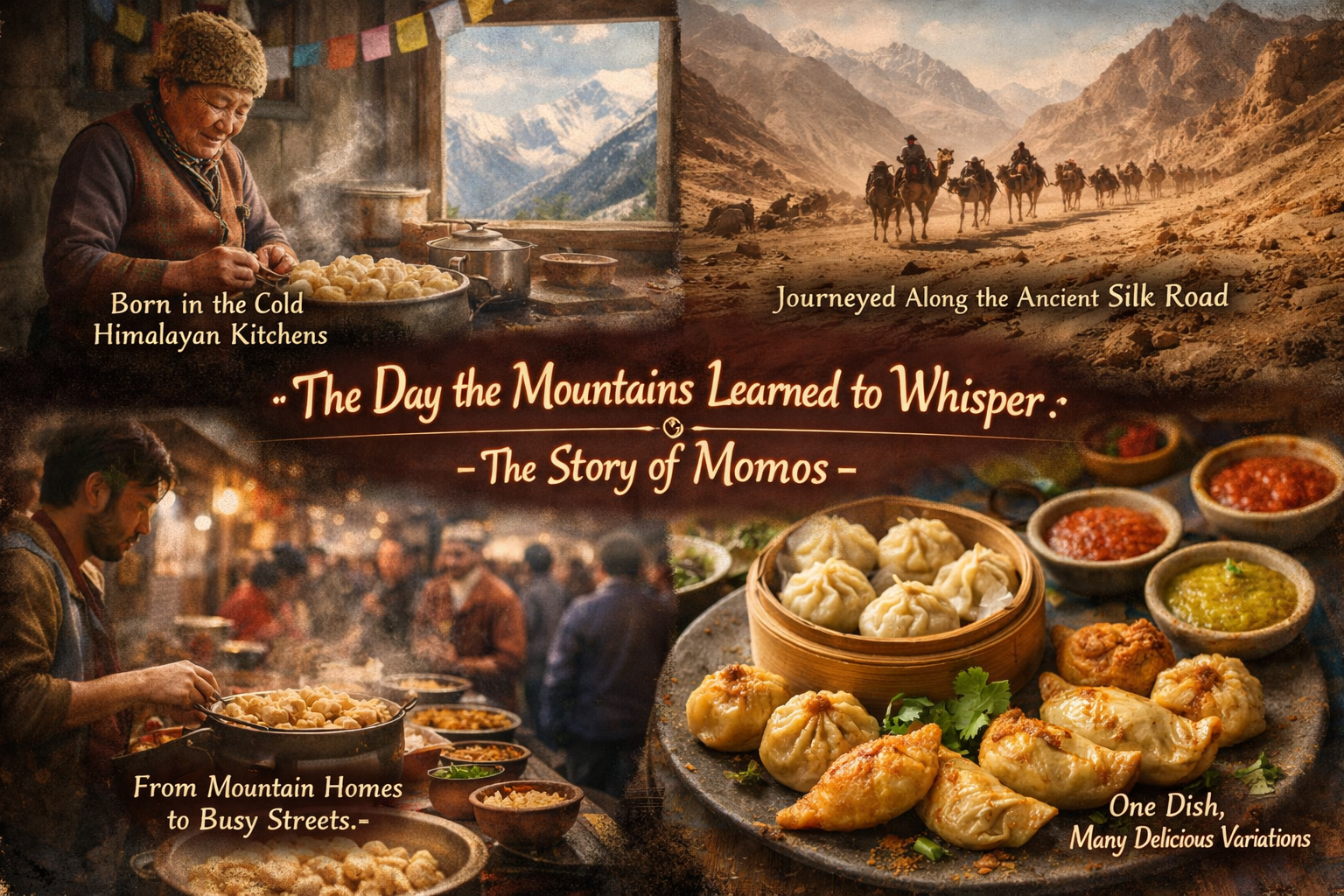
But these humble dumplings didn’t always belong to crowded streets and late-night cravings. Their story began far away, in quiet mountain kitchens, where food wasn’t just comfort—it was survival.
Let’s unfold the delicious journey of momos: how they were invented, how they travelled across borders, how they became street-food royalty, and why their variations never stop surprising us.
Born in the Cold: The Invention of Momos
Long before food blogs and street carts, dumplings were born out of necessity.
In the high-altitude regions of the Himalayas, especially in Tibet and Nepal, winters were brutal. Fresh vegetables were scarce, cooking fuel was limited, and meals had to be warm, filling, and efficient.
Enter the dumpling.
Inspired by ancient Chinese dumplings like jiaozi, travellers and monks carried the idea across the legendary Silk Road. Locals adapted it—thicker wrappers to survive steaming, spiced fillings for warmth, and shapes that sealed in every drop of nourishment. These evolved dumplings came to be known as momos.
Originally, momos were handmade at home, shared during festivals, family gatherings, and winter evenings—never rushed, always respected.
From Hearth to Homeland: How Momos Travelled South
History doesn’t just move people—it moves food.
When Tibetan communities migrated into parts of India in the mid-20th century, they brought their food traditions with them. In Himalayan towns and hill stations, momos found new kitchens, new ingredients, and new admirers.
What changed?
- Fillings adapted to local tastes
- Spices became bolder
- Chutneys became fiercer
Yet, the soul of momos stayed the same: simple dough, honest filling, slow steaming.
The Turning Point: Momos Meet the Street
Then came the moment that changed everything.
Someone rolled a cart onto a busy street.
Momos were affordable. Easy to cook in batches. Perfect for eating on the go. And once paired with spicy red chutney? Addictive.
By the early 2000s, momos weren’t just food—they were a ritual:
- After college classes
- During office lunch breaks
- On rainy evenings
- At midnight, hunger attacks
From quiet mountain homes, momos had officially become street-food superstars.
One Dish, Many Lives: The Endless Variations of Momos
Momos survived because they evolved.
🔥 By Cooking Style
- Steamed Momos – soft, juicy, timeless
- Fried Momos – golden, crispy comfort
- Pan-Fried (Kothey) Momos – crispy base, steamed top
- Tandoori Momos – smoky, spicy Indian fusion
- Jhol Momos – floating in a spicy Nepalese gravy
🌱 By Filling
- Vegetable Momos – cabbage, carrot, onion
- Chicken Momos – the all-time favourite
- Paneer Momos – rich and indulgent
- Pork & Beef Momos – traditional Himalayan style
- Cheese & Corn Momos – café-era innovation
🌶️ Modern & Experimental
- Chocolate Momos
- Butter Chicken Momos
- Peri-Peri Momos
- Kurkure (Crunchy) Momos
Many may argue, but innovation is exactly why momos never disappeared.
Why Momo’s Feel Like Home Everywhere
Momos don’t ask where you’re from. They ask you to take another bite.
They’re shared on sidewalks, eaten standing up, passed across tables, and remembered long after the plate is empty. Few foods travel so far yet feel so personal.
From Himalayan winters to global street-food fame, momos remind us of a simple truth:
The best food stories are wrapped in dough, sealed with care, and served hot. For more interesting stories related to food, follow us on Instagram
Amazinggg..Just simply on fire 🔥🔥
Keep it up 👌🎀